

What To Expect In Couples Therapy: First Session And Beyond
Walking into a therapist's office with your partner can feel vulnerable. You might wonder if you'll be judged, forced to relive every argument, or asked to share things you're not ready to discuss. These concerns are valid, and completely normal. Understanding what to expect in couples therapy removes much of that uncertainty and helps you show up ready to do the work that actually matters.
Most couples wait an average of six years before seeking professional help for relationship problems. By then, patterns of disconnection have often become deeply ingrained. The good news? Therapy doesn't require perfection, it requires willingness. Whether you're navigating communication breakdowns, rebuilding trust after betrayal, or simply feeling like roommates instead of partners, the process offers a structured path toward meaningful change.
At Breath of Hope Professional Counseling, we specialize in Gottman Method couples therapy, an evidence-based approach built on decades of research into what makes relationships thrive. Our San Antonio practice, and virtual sessions across Texas, provides a private, restorative space where couples can explore difficult dynamics with curiosity rather than blame. We've guided hundreds of partners through their first sessions and beyond.
This guide walks you through the entire couples therapy experience: from your initial phone consultation and first appointment to the ongoing work that creates lasting transformation. You'll learn what therapists actually do in session, how to prepare emotionally, and what realistic progress looks like over time.
What couples therapy is and how it works
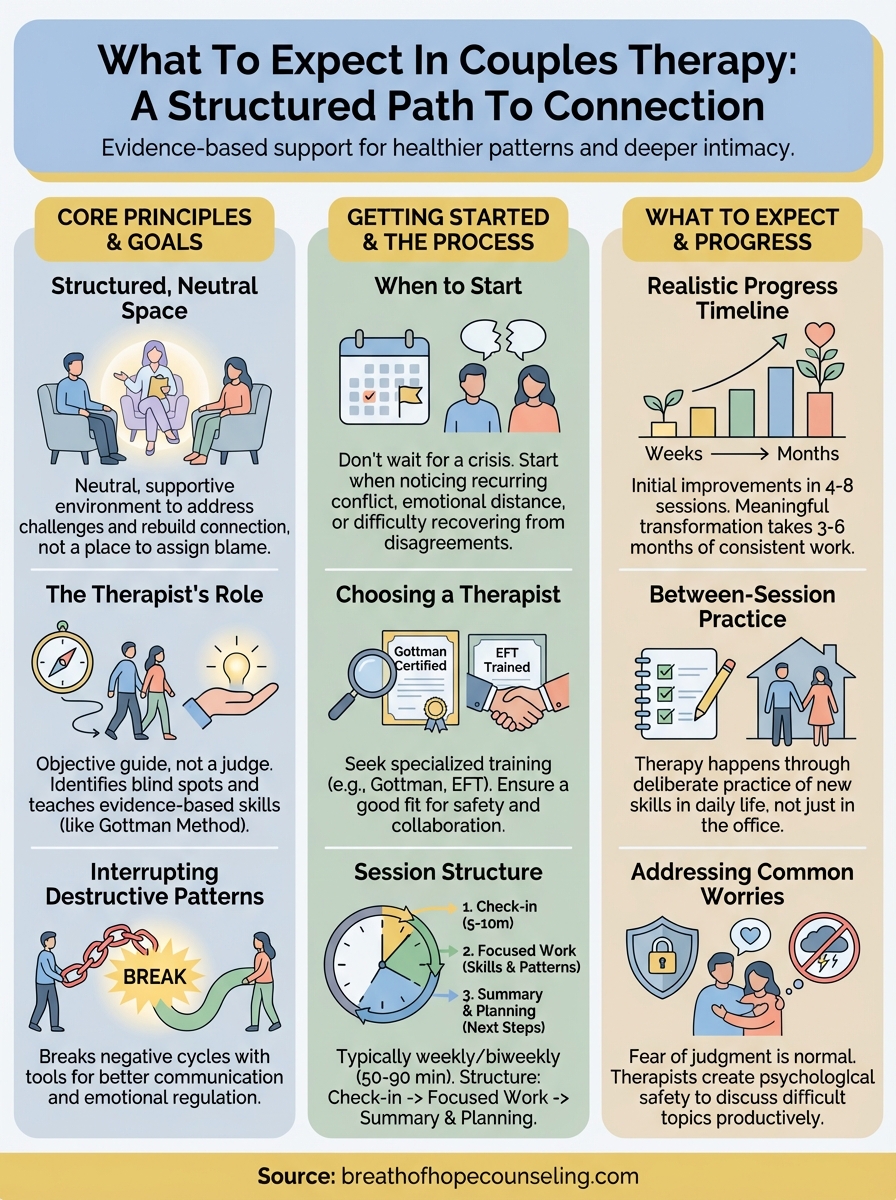
Couples therapy is structured professional support where you and your partner meet with a trained therapist to address relationship challenges, improve communication, and rebuild connection. Unlike venting to a friend or arguing at home, therapy provides a neutral space with someone who understands relationship dynamics and can guide both of you toward healthier patterns. Your therapist doesn't take sides or assign blame. Instead, they help you see the cycles you're stuck in and teach specific skills to break free from them.
The process works through a combination of assessment, intervention, and practice. During your initial sessions, the therapist gathers information about your relationship history, current concerns, and individual backgrounds. They observe how you interact, identify patterns that create distance or conflict, and develop a customized treatment plan based on what they discover. From there, you learn new tools for managing disagreements, expressing needs clearly, and responding to your partner with compassion instead of defensiveness.
The core structure of couples therapy
Most couples therapy sessions last 50 to 90 minutes and occur weekly or biweekly, depending on your needs and schedule. You typically start with individual intake sessions where each partner meets alone with the therapist, followed by joint sessions where you work together. This format allows the therapist to understand both perspectives without either person feeling ganged up on or silenced in front of their partner.

Your therapist structures each session around specific goals. They might ask you to discuss a recent conflict while they observe your communication style, assign exercises to practice between sessions, or teach concrete techniques like fair fighting rules or active listening. Sessions feel conversational rather than clinical, but the therapist actively guides discussions to keep them productive instead of letting them devolve into the same arguments you have at home.
Therapy gives you a safe container to say difficult things and a trained professional to help you hear them differently than you would on your own.
-
Your therapist serves as an objective guide, not a judge or referee. They bring expertise in relationship science and human behavior without the emotional investment that clouds your judgment when you're in the middle of a fight. Their job involves identifying blind spots you can't see yourself, interrupting destructive patterns in real time, and teaching skills that research shows actually improve relationship satisfaction.
Therapists remain neutral even when one partner's behavior seems clearly problematic. They understand that relational issues involve both people, even if the hurt feels one-sided. If infidelity occurred, for example, the therapist addresses both the betrayal and the relationship conditions that contributed to vulnerability, without excusing the choice to cheat. This balanced approach helps both partners feel heard while moving toward accountability and healing.
-
Change in couples therapy unfolds gradually through repeated practice and insight. You won't leave your first session with all your problems solved, but you will gain clarity about what needs attention. Early sessions often focus on reducing conflict intensity and creating basic safety, while later work addresses deeper patterns like childhood wounds or attachment injuries that fuel current struggles.
Most couples notice initial improvements within four to eight sessions, though meaningful transformation typically requires three to six months of consistent work. You might find yourselves fighting less frequently, recovering faster from disagreements, or feeling more connected during everyday moments. Progress isn't linear. You'll have setbacks and difficult weeks, but the overall trajectory moves toward understanding what to expect in couples therapy and building the relationship you actually want instead of staying stuck in the one you have.
Therapy intensives offer an alternative timeline for couples who want faster results or face time constraints. These extended sessions, often spanning multiple hours or full days, allow you to dive deeper without the week-long gaps that slow momentum in traditional weekly appointments.
-
Therapy works because it interrupts destructive patterns you can't break on your own. When you're inside a relationship, you lack perspective on the cycles that keep you stuck. You react from emotional wounds, misread your partner's intentions, and repeat the same arguments without realizing the real issue lies beneath what you're fighting about. A trained therapist sees the underlying dynamics that drive surface conflicts and teaches you how to address the actual problems instead of just their symptoms.
-
Research shows that couples who attend therapy experience significant improvements in relationship satisfaction, with 70% reporting positive outcomes. The Gottman Method, specifically, has been validated through four decades of longitudinal studies tracking thousands of couples. These aren't abstract theories or pop psychology. They're evidence-based interventions that target the specific behaviors and communication styles that predict relationship success or failure.
Your friends and family mean well, but they bring bias and limited expertise to your relationship challenges. A therapist offers structured frameworks like fair fighting techniques, repair strategies, and emotional regulation skills that casual advice can't provide. They also create accountability for both partners to do the work instead of blaming the other person or waiting for change to happen magically.
Professional therapy gives you tools you can't learn from podcasts or books alone because it addresses your specific dynamic in real time.
Signs you're ready to start
You don't need to wait until your relationship reaches crisis levels to benefit from therapy. In fact, earlier intervention often leads to faster progress because destructive patterns haven't calcified over years of repetition. Consider starting therapy when you notice recurring conflicts that never fully resolve, emotional distance growing between you, or difficulty recovering from disagreements even after you've apologized.
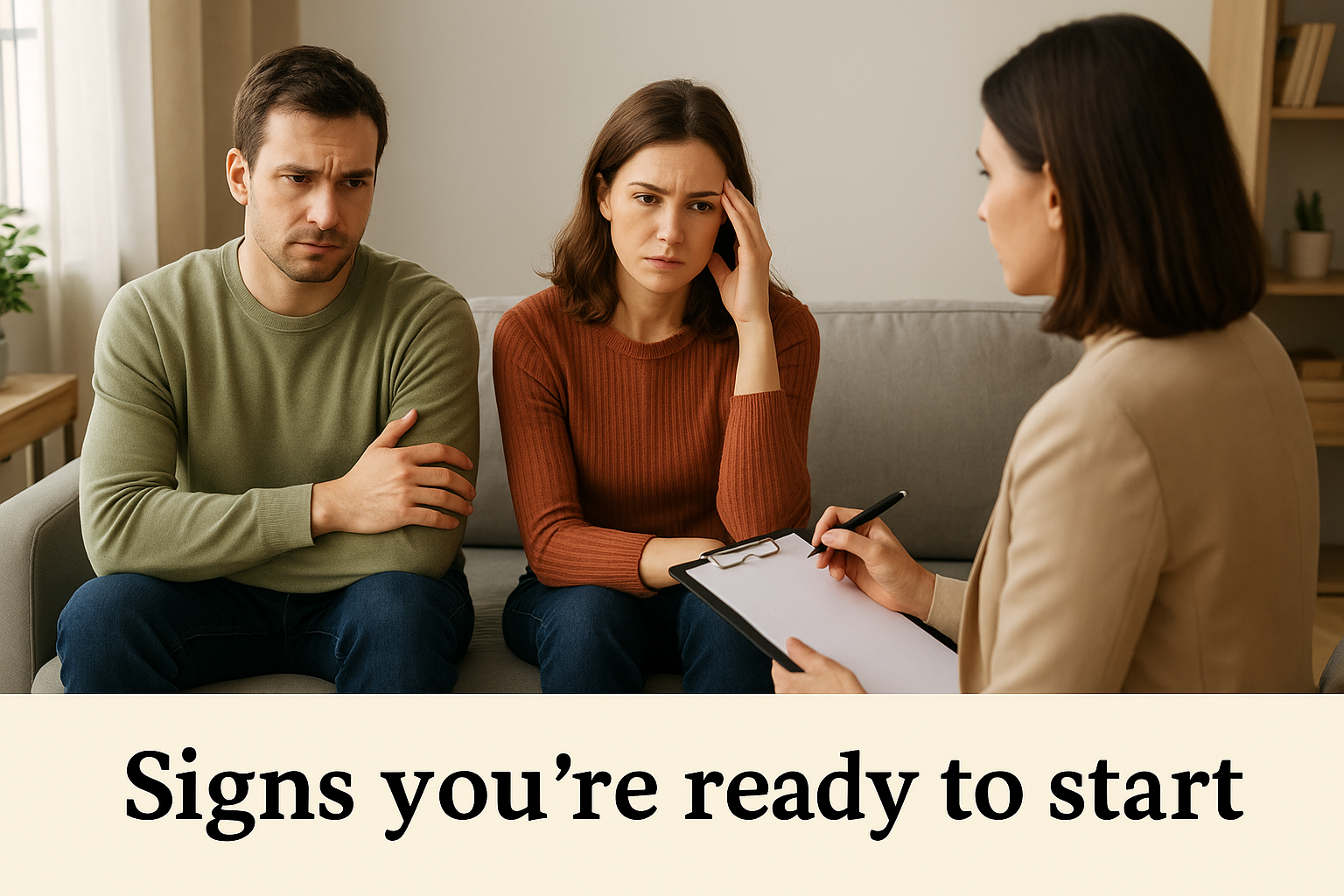
Specific indicators include constant criticism or defensiveness, feeling like roommates instead of partners, struggling to communicate about sex or finances, navigating major life transitions, or recovering from betrayal. If you find yourself wondering what to expect in couples therapy, that curiosity itself suggests you're ready to explore whether professional support could help. You don't need mutual agreement to schedule an initial consultation. Many couples begin with one partner more motivated than the other, and therapists know how to work with different levels of readiness while respecting both people's perspectives and concerns about the process.
-
Finding the right therapist involves more than picking the first name from your insurance list. You want someone with specialized training in couples work, not just general mental health experience. A therapist who primarily sees individuals might lack the specific skills needed to manage the complex dynamics between two people in the same room. Look for credentials like Gottman Method Certified Therapist, Emotionally Focused Therapy (EFT) training, or extensive postgraduate education in relational systems.
-
Effective couples therapists complete rigorous specialized training beyond their basic licensure. The Gottman Method requires therapists to complete multiple levels of certification involving workshops, video submissions, and case consultations before they can officially use the approach. Similarly, EFT practitioners undergo intensive training in attachment theory and emotional regulation. These credentials signal that the therapist has invested serious time mastering evidence-based interventions rather than winging it based on intuition.
You also want to consider whether the therapist has experience with your specific challenges. If you're recovering from infidelity, look for someone trained in trauma and betrayal work. For premarital counseling, seek therapists who focus on preventive relationship education. If cultural or religious factors play important roles in your relationship, find a therapist who understands and respects those dimensions without imposing their own values.
-
Most practices offer a free phone consultation before you commit to a first session. Use this time strategically. Ask about their theoretical approach, typical treatment length for couples with concerns similar to yours, and whether they've helped other clients navigate what to expect in couples therapy when facing your particular challenges. Request information about session structure and whether they meet with partners individually or only jointly.

The consultation call reveals whether the therapist's communication style and personality fit what you need to feel safe being vulnerable.
Pay attention to how the therapist responds to your questions. Do they explain their approach clearly without overwhelming you with jargon? Do they demonstrate genuine curiosity about your situation rather than offering premature advice? A good match feels collaborative and respectful, not authoritarian or dismissive.
Practical considerations that matter
Location and scheduling logistics affect your ability to attend consistently. Virtual therapy expands your options significantly, allowing you to work with specialized practitioners across your entire state instead of limiting yourself to your immediate area. Consider whether evening or weekend appointments fit your schedule better than traditional daytime slots.
Cost matters, but don't let it become the only deciding factor. Many therapists offer sliding scale fees for clients with financial constraints. Some provide intensive formats that compress months of weekly sessions into extended appointments, which can be more cost-effective overall if you value faster progress over stretched-out treatment.
How to prepare for your first session
Preparation for your first couples therapy appointment involves both practical logistics and emotional readiness. You don't need to rehearse what you'll say or coordinate stories with your partner beforehand. In fact, over-planning can create anxiety and make the session feel scripted instead of authentic. Your therapist wants to understand your genuine dynamic, which means showing up honestly rather than performing a polished version of your relationship.
-
The most important preparation happens internally. Spend time before your appointment reflecting on what you hope to gain from therapy rather than building a case against your partner. Consider which patterns frustrate you most, where you feel stuck, and what a healthier relationship would look and feel like to you. This internal work helps you participate constructively instead of defensively when difficult topics arise during the session.
Expect to feel nervous, uncomfortable, or even resistant. These reactions are completely normal and don't mean you're not ready for therapy. Your therapist understands that vulnerability feels risky, especially when you're discussing painful dynamics in front of the person who hurt you. Acknowledging your discomfort to yourself and being willing to proceed despite it demonstrates the courage therapy requires.
Walking into therapy feeling uncertain or scared doesn't indicate weakness. It shows you value your relationship enough to face hard truths.
-
Handle basic logistics so practical concerns don't interfere with your ability to focus during the session. Arrange childcare or work coverage to eliminate time pressure and interruptions. Confirm the appointment time, location, and whether you need to complete any intake paperwork beforehand. Many practices send forms electronically that cover medical history, relationship background, and current concerns.
Discuss with your partner ahead of time whether you'll drive together or separately. Some couples prefer arriving independently to have space for processing afterward without immediately debriefing in the car. Others find the shared commute helps them feel unified going into a vulnerable experience.
-
You don't need physical materials beyond completed paperwork and your insurance card if applicable. Leave notebooks at home unless your therapist specifically requests them. The first session focuses on getting to know you as a couple, understanding what to expect in couples therapy moving forward, and establishing safety and rapport rather than taking detailed notes or completing homework assignments.
Bring your authentic self and willingness to examine your own contributions to relationship problems. The therapist will ask both partners about their perspectives, family backgrounds, and relationship history. You might discuss the present issue that prompted you to seek help or explore broader patterns that create distance between you. Openness to looking at yourself honestly, not just pointing out what your partner does wrong, determines how effectively therapy can help you grow.
-
The initial phase of couples therapy focuses on assessment and foundation building rather than diving immediately into conflict resolution. Your therapist spends these early sessions gathering information about your relationship history, individual backgrounds, and the specific issues bringing you to treatment. This groundwork allows them to develop a customized treatment plan that addresses your unique dynamic instead of applying generic advice that might not fit your situation.
-
Many therapists begin by meeting with each partner separately before joint sessions start. These individual meetings typically last 50 to 90 minutes and give you space to share your perspective without worrying about your partner's reaction in the room. Your therapist asks about your childhood, past relationships, mental health history, and what you hope to accomplish through therapy.
This format serves multiple purposes. It allows the therapist to identify potential issues like substance abuse, domestic violence, or severe mental health concerns that require individual treatment alongside couples work. You can share sensitive information that feels too vulnerable to disclose in front of your partner during early sessions. Individual intakes also help the therapist understand each person's attachment style, communication patterns, and relationship expectations before observing how you interact together.
Individual sessions give your therapist insight into both perspectives without either partner feeling outnumbered or defensive from the start.
-
After individual sessions, you meet jointly for structured assessment. The therapist observes how you communicate about difficult topics, asks you to describe recent conflicts, and identifies the patterns that keep you stuck. They might use standardized questionnaires or structured interviews to evaluate relationship satisfaction, conflict management styles, and areas needing attention. This process feels conversational rather than clinical, but your therapist actively gathers specific information that shapes what to expect in couples therapy as you progress.
Goal setting happens collaboratively during these early joint sessions. Your therapist helps you identify concrete objectives beyond vague wishes like "better communication." You might aim to reduce criticism during arguments, increase emotional intimacy, rebuild trust after betrayal, or improve sexual connection. Clear goals create measurable progress markers so you recognize improvements instead of feeling stuck in ambiguity.
-
Early sessions prioritize creating psychological safety so both partners feel comfortable being vulnerable. Your therapist establishes ground rules for respectful communication, intervenes when discussions become destructive, and teaches basic tools for managing emotional intensity. They demonstrate that therapy provides a structured container where difficult conversations can happen without devolving into the same painful patterns you experience at home.
-
Once assessment wraps up, your ongoing sessions shift from information gathering to active intervention and skill building. You arrive knowing your therapist understands your relationship dynamic and has developed a clear map for where you need to go. Each appointment follows a general structure while remaining flexible enough to address urgent concerns that arose during the week. Your therapist balances planned work with real-time responsiveness to what's happening between you right now.
The typical session format
Most sessions begin with a brief check-in where you report what's improved, what's struggled, or which conflicts surfaced since your last appointment. Your therapist might ask about specific homework assignments or situations you practiced new skills in during daily life. This opening typically takes five to ten minutes and helps the therapist gauge where to focus the remaining session time.

The middle portion involves focused work on specific relationship patterns. Your therapist might ask you to discuss a recent argument while they observe your communication style and interrupt destructive patterns in real time. They teach concrete techniques like softened startups, repair attempts, or emotional regulation strategies and have you practice them together in session. You might explore deeper emotional needs driving surface conflicts or examine how childhood experiences shape your current relationship expectations.
Understanding what to expect in couples therapy means recognizing that sessions feel like guided conversations with intentional direction rather than aimless venting or unpredictable lectures.
Sessions close with summary and planning for the week ahead. Your therapist reviews key insights from the appointment, assigns specific practices or exercises to try at home, and confirms your next session date. This structure creates continuity between appointments and ensures therapeutic progress extends beyond the fifty minutes you spend in the office.
-
Early ongoing sessions focus on stabilizing your relationship and reducing crisis-level conflict. You learn basic communication tools, practice de-escalating heated moments, and establish safety for vulnerability. As you build these foundational skills, later sessions address deeper patterns like attachment injuries, unresolved resentments, or intimacy barriers that require more emotional capacity to navigate effectively.
Your therapist adjusts the pace based on how you respond to interventions. Some couples progress quickly once they understand their dynamic, while others need extended time working through layers of hurt or mistrust. Progress isn't measured by never fighting again but by how effectively you repair after disconnection and whether you feel more understood by your partner than when you started.
-
Therapy happens primarily outside your appointments through deliberate practice in real situations. Your therapist assigns specific exercises like daily connection rituals, structured conflict conversations, or appreciation practices. You experiment with new responses when triggers arise instead of defaulting to old patterns. This consistent application of what you learn in session determines whether therapy creates lasting change or just provides temporary relief while you're in the office.
-
Therapists draw from established therapeutic frameworks backed by research rather than relying on intuition or generic relationship advice. The specific methods they use depend on their training and your relationship needs, but most evidence-based approaches share common elements like structured communication techniques, emotional regulation skills, and exercises designed to rebuild connection. Understanding the tools your therapist might employ helps you participate more actively instead of wondering what to expect in couples therapy when they suggest specific practices.
-
The Gottman Method focuses on building friendship and intimacy while managing conflict constructively. This research-based framework identifies specific behaviors that predict relationship success or failure, including the Four Horsemen of criticism, contempt, defensiveness, and stonewalling. Your therapist teaches you to recognize these destructive patterns and replace them with healthier alternatives like gentle startups, repair attempts, and turning toward your partner's bids for connection.
Gottman-trained therapists use structured assessments like the Oral History Interview and relationship questionnaires to understand your dynamic. They guide you through exercises like the Dreams Within Conflict conversation, which helps you discover the deeper meanings behind recurring disagreements. You practice specific techniques during sessions and receive homework assignments that integrate new skills into your daily life, like daily stress-reducing conversations or weekly date nights with intentional structure.
-
EFT operates from attachment theory, focusing on the emotional bonds between partners and how fears of abandonment or rejection drive negative interaction patterns. Your therapist helps you identify the underlying emotions beneath surface conflicts and teaches you to express vulnerable feelings instead of defensive reactions. This approach views most relationship problems as failed attempts to feel secure and connected with your partner.
Therapists using EFT guide you through conversations that access deeper emotions and create new experiences of responsiveness between you. You learn to recognize when you're caught in pursuit-withdrawal cycles or mutual withdrawal and practice reaching for your partner in healthier ways. The method emphasizes emotional accessibility and creating secure attachment bonds that withstand stress and conflict.
Effective therapy methods teach you specific skills you can practice repeatedly until new patterns replace old automatic reactions.
-
Between sessions, you practice concrete assignments that reinforce what you learned in therapy. Common exercises include scheduled conflict discussions using specific rules, daily appreciation practices where you verbally recognize positive qualities in your partner, or structured intimacy-building activities. Your therapist might assign reading materials, communication templates to follow during difficult conversations, or sensory awareness practices that help you recognize early signs of emotional flooding before conflicts escalate beyond productive discussion.
-
Most couples enter therapy with similar anxieties about judgment, forced disclosure, or making things worse. These concerns stem from vulnerability rather than reality. You might wonder whether your therapist will blame one partner more than the other, require you to stay together regardless of circumstances, or push you toward decisions you're not ready to make. Understanding what to expect in couples therapy means recognizing that ethical therapists respect your autonomy while guiding you toward clarity about what you genuinely want rather than imposing predetermined outcomes.
-
You probably wonder how long therapy takes before you notice real improvement. Most couples see initial changes within four to eight sessions, though deeper transformation typically requires three to six months of consistent work. Progress depends on your specific challenges, how entrenched your negative patterns are, and whether both partners actively practice new skills between appointments. Therapy doesn't follow a fixed timeline because relationships heal at different rates based on complexity and commitment level.
Another frequent question involves whether your therapist shares what you said during individual sessions with your partner. Ethical practices establish clear confidentiality agreements upfront. Your therapist might share themes or patterns without repeating exact words, or they keep individual sessions completely separate unless you give explicit permission otherwise. Ask about confidentiality policies during your consultation so you understand the boundaries before you disclose sensitive information that might affect trust in the therapeutic process.
Professional therapists create structure that protects both partners while moving you toward honest conversations that strengthen rather than damage your relationship.
-
Many couples fear that talking about problems in therapy will amplify conflict instead of resolving it. The opposite typically happens. Your therapist helps you discuss difficult topics with structured safety that prevents conversations from escalating into destructive arguments. You learn to address issues productively rather than avoiding them until resentment builds or bringing them up in ways that trigger defensiveness and withdrawal from your partner.
-
Not all therapy experiences serve you well. Watch for therapists who consistently take sides, push their personal values onto your relationship, or seem disengaged and formulaic during sessions. Effective therapists remain curious about your unique dynamic instead of applying cookie-cutter solutions. They adjust their approach when interventions aren't working rather than blaming you for not trying hard enough or lacking motivation to change problematic patterns together.
Trust your instincts if sessions consistently leave you feeling worse rather than gradually building hope and capacity. You deserve a therapist who respects both partners, demonstrates genuine expertise, and creates an environment where vulnerability leads to growth instead of additional harm.
Your next step
Understanding what to expect in couples therapy removes the anxiety that keeps many partners stuck in painful patterns for years. You now know how sessions work, what therapists actually do, and how preparation creates better outcomes from the start. Knowledge alone won't change your relationship, but it positions you to take meaningful action with clarity instead of fear or uncertainty holding you back from getting the help you need.
The hardest part isn't showing up to therapy or doing the work between sessions. It's making the decision to schedule that first consultation before another six months pass and your patterns become even more deeply entrenched. Your relationship deserves professional support that meets you where you are right now, not where you wish you were or think you should be before seeking help.
Schedule a consultation at Breath of Hope Professional Counseling to speak with a Gottman-trained therapist who understands the specific challenges couples face. Our San Antonio practice and virtual sessions across Texas offer the specialized expertise and restorative environment where meaningful change becomes possible through evidence-based couples therapy.