

11 Grounding Techniques for Stress to Calm Anxiety Fast
Your heart races. Your thoughts spiral. Stress has a way of hijacking your body before you even realize what's happening. When anxiety takes hold, grounding techniques for stress offer a practical way to interrupt that cycle and bring yourself back to the present moment.
These sensory-based strategies work by shifting your attention from overwhelming thoughts to physical sensations in your body and surroundings. They require no special equipment or training, just a willingness to pause and reconnect with what's actually happening right now.
At Breath of Hope Professional Counseling, we regularly teach these tools to clients working through anxiety and trauma in our San Antonio practice. Having a personal toolkit of grounding exercises means you have immediate options when stress hits hardest. Below, you'll find 11 techniques to help you calm anxiety fast and regain a sense of control, starting today.
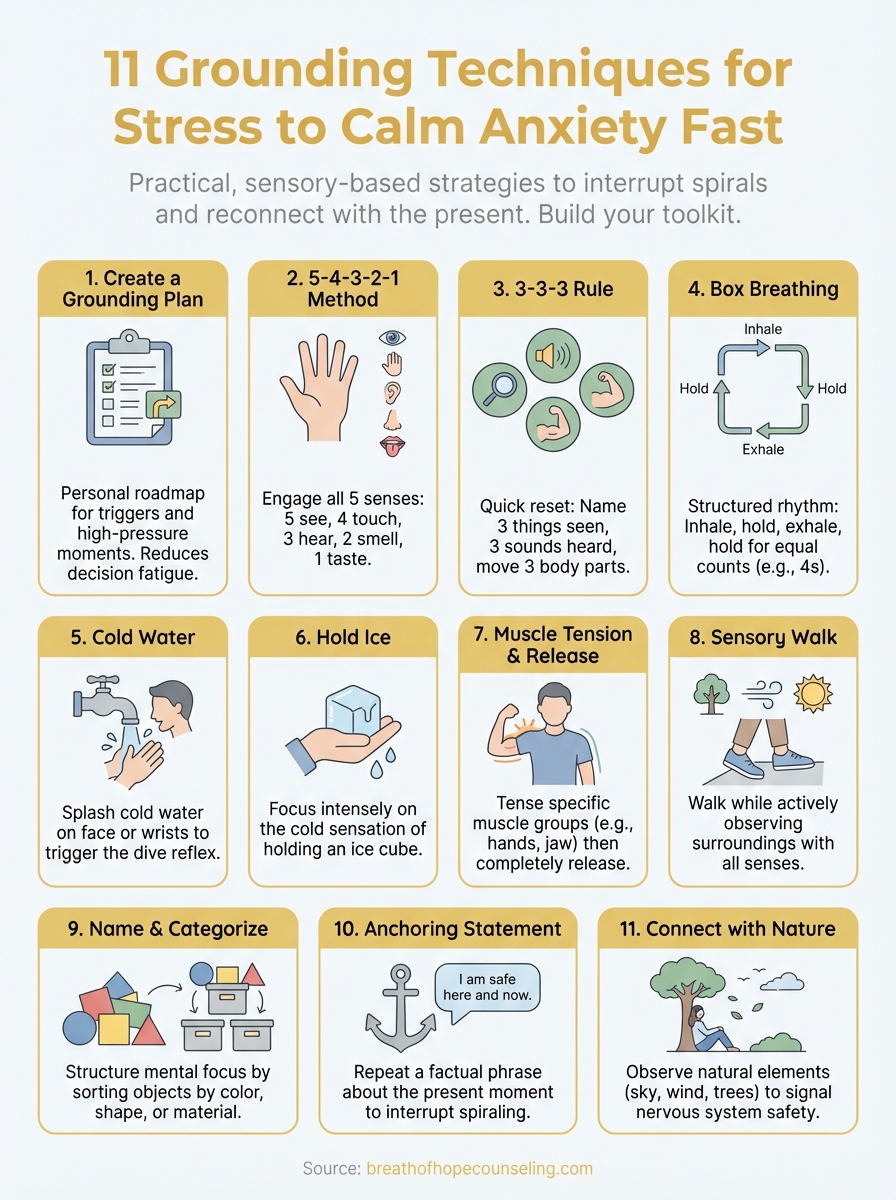
1. Create a grounding plan with Breath of Hope
Building a personalized grounding plan before stress hits gives you practical tools you can reach for in high-pressure moments. Instead of scrambling to remember what works when anxiety spikes, you have a clear roadmap that fits your specific triggers, lifestyle, and nervous system. At Breath of Hope Professional Counseling in San Antonio, our clinicians help clients identify which grounding techniques for stress work best for their bodies and build sustainable plans they can use outside of therapy sessions.
-
A structured grounding plan reduces decision fatigue during overwhelming moments by eliminating guesswork. When your heart races or thoughts spiral, you don't have to figure out what to do next. You simply follow the predetermined steps you've already practiced. This approach helps your nervous system recognize safe patterns, which shortens the time it takes to move from heightened stress back to baseline calm.
Having a plan means you can shift from reacting to stress to responding with intention.
-
Start by noticing your earliest stress signals, whether that's tension in your shoulders, shallow breathing, or racing thoughts. Pull out your written plan or mental checklist and choose one technique to try for 60 to 90 seconds. If the first option doesn't shift your stress level, move to the next technique on your list without judgment. The goal is finding what interrupts the stress cycle in real time, not forcing a single method to work.
-
Match specific techniques to the situations where stress shows up most. If work deadlines trigger overwhelm, you might select quiet exercises like box breathing or the 5-4-3-2-1 method. For relationship conflict, movement-based options like a sensory walk or progressive muscle tension may help you process stored energy. Track what works across different contexts so your plan evolves with your needs.
-
Creating your plan with a therapist ensures you're choosing techniques that address your nervous system instead of accidentally reinforcing avoidance patterns. If stress regularly disrupts your daily life, or if you've experienced trauma, working with a licensed clinician provides the structure and safety needed to build lasting skills. At Breath of Hope, we integrate grounding plans into therapy for anxiety, trauma, and relationship stress across Texas.
2. Use the 5-4-3-2-1 grounding method
The 5-4-3-2-1 technique is one of the most widely recommended grounding techniques for stress because it engages all five senses to pull you out of anxious thoughts. By directing your attention to specific sensory details in your environment, you create a mental interruption that slows racing thoughts and reconnects you with the present moment. This method requires no tools and works anywhere, making it useful during panic attacks, overwhelming moments at work, or when stress builds unexpectedly.
Why this works fast
Your nervous system struggles to maintain high anxiety while simultaneously processing detailed sensory input from your surroundings. When you consciously name things you can see, touch, hear, smell, and taste, you activate the part of your brain responsible for observation and categorization rather than threat detection. This shift breaks the feedback loop between anxious thoughts and physical stress symptoms.
Engaging multiple senses at once forces your brain to focus on concrete reality instead of imagined threats.
How to do it step by step
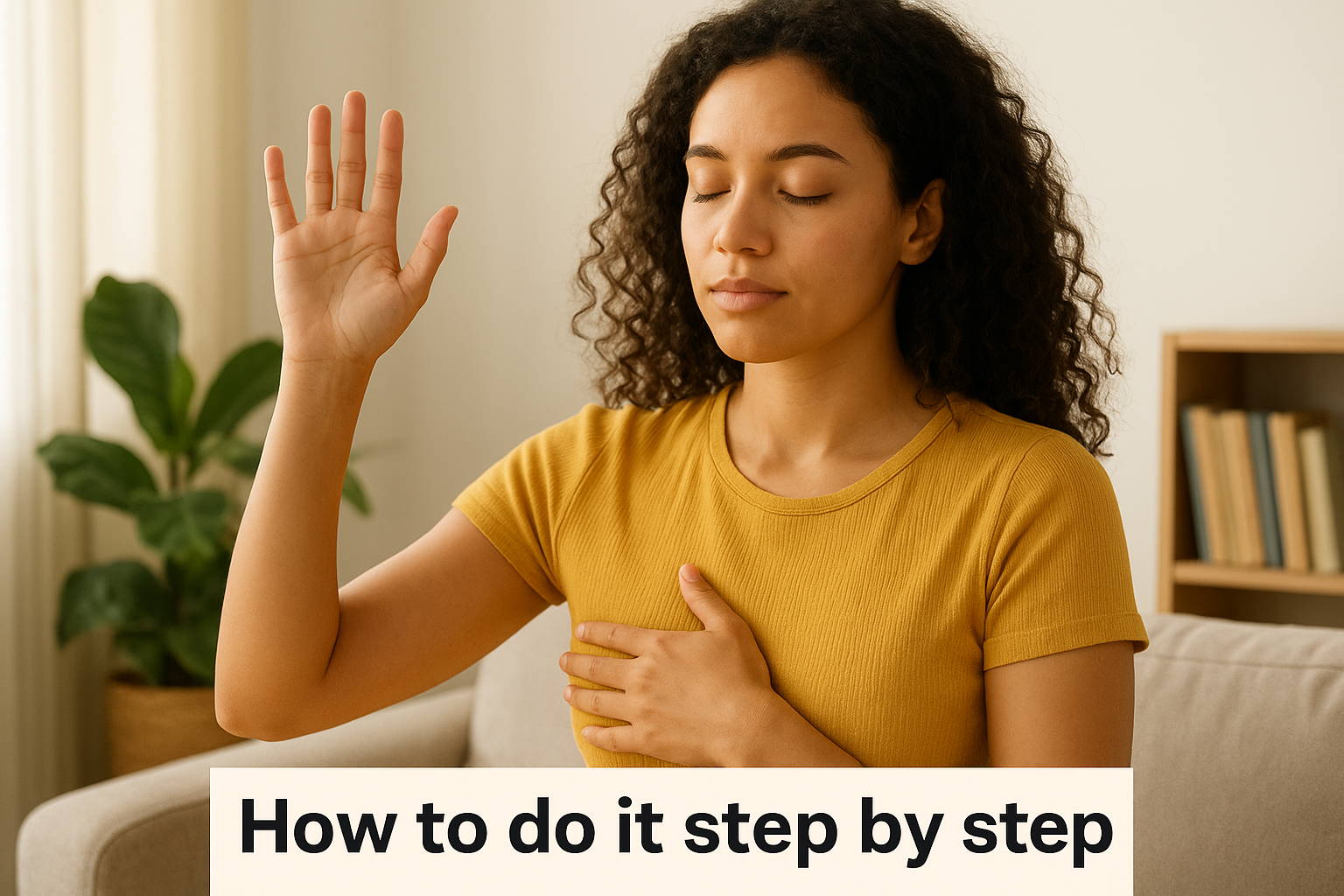
Identify five things you can see around you, naming each one aloud or silently. Notice four things you can physically touch, actually making contact if possible. Listen for three distinct sounds in your environment. Recognize two things you can smell, or recall two favorite scents if none are present. Finally, name one thing you can taste, even if it's just the inside of your mouth. Spend a few seconds on each item rather than rushing through the list.
-
If your environment feels too chaotic, you can reverse the order and start with taste or smell to avoid sensory overload. Another option is focusing on one sense at a time for longer periods, such as identifying ten things you see before moving to sound. You can also reduce the numbers to 3-2-1 when you need a faster version that still interrupts stress.
-
Rushing through the exercise without actually pausing to observe each sensory detail turns it into a mental checklist rather than a grounding tool. Choosing items too quickly or judging whether you're doing it "right" keeps your analytical mind active instead of letting sensory input do the work. If you notice yourself going through the motions, slow down and spend at least three seconds fully experiencing each item you name.
3. Try the 3-3-3 rule for anxiety
The 3-3-3 rule offers a simplified version of sensory grounding that works when your mind feels too scattered to follow longer sequences. This technique asks you to identify three things in three different sensory categories, creating a quick reset that brings your attention back to your immediate surroundings. Unlike more complex grounding techniques for stress, this method prioritizes speed over depth, making it useful when anxiety hits suddenly or when you need to calm down before an important conversation or event.
-
This exercise interrupts the cognitive spiral that happens when anxious thoughts feed on themselves and pull you further from the present moment. By forcing your brain to scan your environment and label specific observations, you activate executive function areas that compete for the same mental resources anxiety uses. The three-part structure keeps the task manageable even when your nervous system feels overwhelmed.
Naming what you observe externally reduces the bandwidth available for internal worry.
-
Name three things you see in your immediate environment. Identify three sounds you can hear right now, whether loud or subtle. Notice three body parts you can move, then move them slightly. You can complete this entire sequence in less than a minute by spending about 15 seconds on each category without overthinking your choices.
-
If you feel disconnected from your body, physically touch three objects around you instead of just naming them. Another option involves saying your observations out loud to add auditory grounding. You can also repeat the sequence twice with different items to extend the grounding effect when the first round doesn't fully reconnect you.
-
Your breathing should slow noticeably and your thoughts should feel less urgent or intrusive. Physical tension in your jaw, shoulders, or stomach often releases when the technique successfully shifts your nervous system. If you still feel stuck in anxious thoughts after two rounds, switch to a different grounding method that involves more physical sensation or movement.
4. Do box breathing
Box breathing gives you a structured rhythm that calms your nervous system by balancing oxygen and carbon dioxide levels while forcing your mind to focus on counting instead of spiraling. This grounding technique for stress originated in military and first responder training because it works quickly under pressure. You inhale, hold, exhale, and hold again for equal counts, creating a mental anchor that interrupts the fight-or-flight response and slows your heart rate within minutes.
-
The equal breath counts activate your parasympathetic nervous system, which counteracts the stress hormones flooding your body during anxiety. Holding your breath after the exhale slightly increases carbon dioxide in your bloodstream, signaling your brain that you are safe enough to slow down. This physiological shift reduces cortisol and helps regulate blood pressure.
Controlled breathing tells your body it doesn't need to stay in survival mode.
-
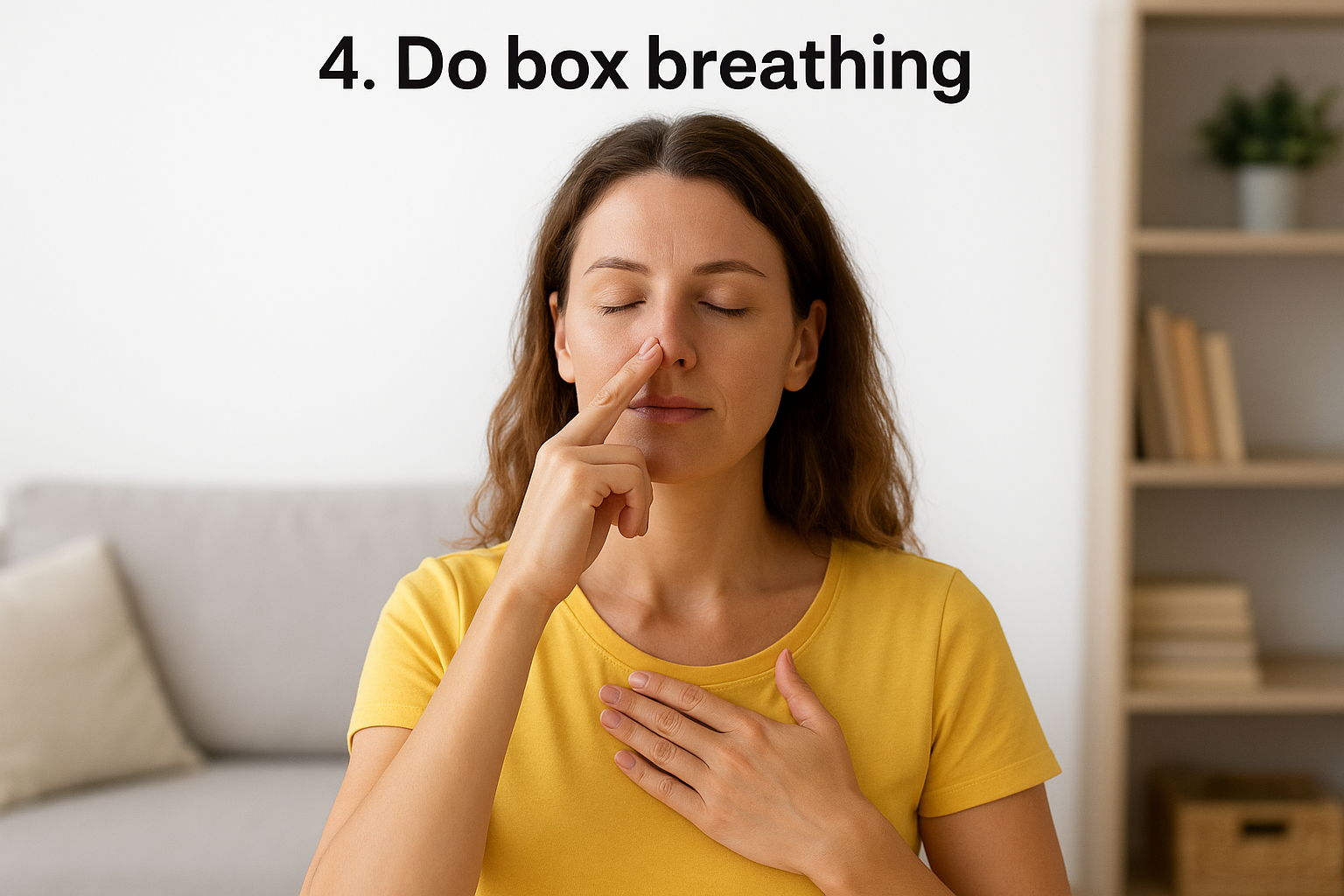
Inhale through your nose for a count of four seconds. Hold your breath for four seconds without tensing. Exhale slowly through your mouth for four seconds. Hold your lungs empty for four seconds before starting the next cycle. Repeat this pattern for at least four full rounds to notice a measurable shift in your stress level.
-
Start with three-second counts if four feels too long or if you feel lightheaded. For mild stress, you can extend to five or six seconds per phase to deepen the calming effect. Match the count to what your body can handle without straining or holding tension in your chest.
-
Some people with trauma histories or panic disorders find focused breathing increases their distress. If this happens, switch immediately to a sensory-based technique like holding ice or naming objects around you. You can also try breathing without holding, simply matching your inhale and exhale lengths instead.
5. Ground through cold water
Cold water creates an immediate physiological response that interrupts the stress cycle by activating your body's dive reflex. This grounding technique for stress works by shocking your nervous system out of anxiety mode and forcing your attention onto the physical sensation of temperature change. You can use cold water at a sink, in the shower, or by splashing your face, making it accessible in most settings when you need fast relief from overwhelming thoughts or panic symptoms.
-
Cold exposure triggers your vagus nerve, which controls your parasympathic nervous system and helps your body return to a calm state. The sudden temperature change overrides the threat signals your brain is sending during anxiety, creating a physical interruption that's stronger than mental attempts to calm down. Your heart rate often slows within seconds of cold contact.
Cold water forces your nervous system to prioritize a new sensation over the stress response.
-
Run cold tap water and hold your wrists or hands under the stream for 30 to 60 seconds. You can also splash cold water on your face and neck, which activates the dive reflex more directly. Focus on the temperature sensation rather than trying to force yourself to relax.
-
Carry a reusable ice pack or frozen water bottle in your bag that you can press against your wrists or forehead. You can also wet a cloth or paper towel with cold water from a drinking fountain or bottle and hold it against your skin.
-
Skip this technique if you have Raynaud's disease or circulation problems that make cold painful or dangerous. People with certain heart conditions should check with their doctor before using cold exposure as one of their grounding techniques for stress.
6. Hold ice and track the sensations
Holding ice in your hand creates an intense physical sensation that demands your full attention and pulls your mind away from anxious thoughts. This grounding technique for stress works through distraction and sensory focus, giving your brain something concrete and immediate to process instead of abstract worries. The cold sensation builds gradually as you hold the ice, creating a timeline you can follow that helps you stay present for the duration of the exercise.
-
Spiraling thoughts gain momentum when your mind has unlimited capacity to jump between fears and scenarios. Ice interrupts this pattern by creating a physical sensation strong enough to compete for your attention. Your brain prioritizes the cold input over the thought loop because it registers as more urgent information that requires processing.
Strong physical sensations redirect mental energy away from rumination and toward immediate experience.
-
Grab an ice cube from your freezer or a cold pack from your bag. Hold it in your palm or between your fingers without gripping too tightly. Notice the temperature, the melting water, how the cold spreads across your skin, and whether your fingers start to tingle. Continue holding for 30 to 60 seconds or until your thoughts slow down.
-
Keep a small ice pack in an insulated lunch bag or your car when you're out. You can also hold a cold drink against your wrist or palm if ice isn't available. Most people won't notice if you're quietly holding something cold while standing in line or sitting in a waiting room.
-
Switch to lukewarm water on your hands if cold feels unbearable or if you have nerve sensitivity. You can also try holding a textured object like a stress ball or piece of fabric that provides sensory input without temperature discomfort.
7. Use progressive muscle tension and release
Progressive muscle relaxation gives you a direct way to discharge the physical tension that builds in your body during stress. This grounding technique for stress involves deliberately tightening specific muscle groups for a few seconds before releasing them, creating a noticeable contrast between tension and relaxation that helps you recognize where you're holding stress. Unlike breathing exercises that focus on breath control, this method targets the muscular tightness that accompanies anxiety and overwhelm.
-
When you tense and release muscles intentionally, you give your nervous system permission to let go of the protective bracing it uses during stress. Anxiety often manifests as chronic muscle tension in your jaw, shoulders, or stomach, which your brain interprets as ongoing threat signals. By cycling through tension and release, you teach your body the difference between holding on and relaxing, which strengthens your ability to notice and release stress before it escalates.
Deliberate muscle work interrupts the feedback loop between physical tension and anxious thoughts.
-
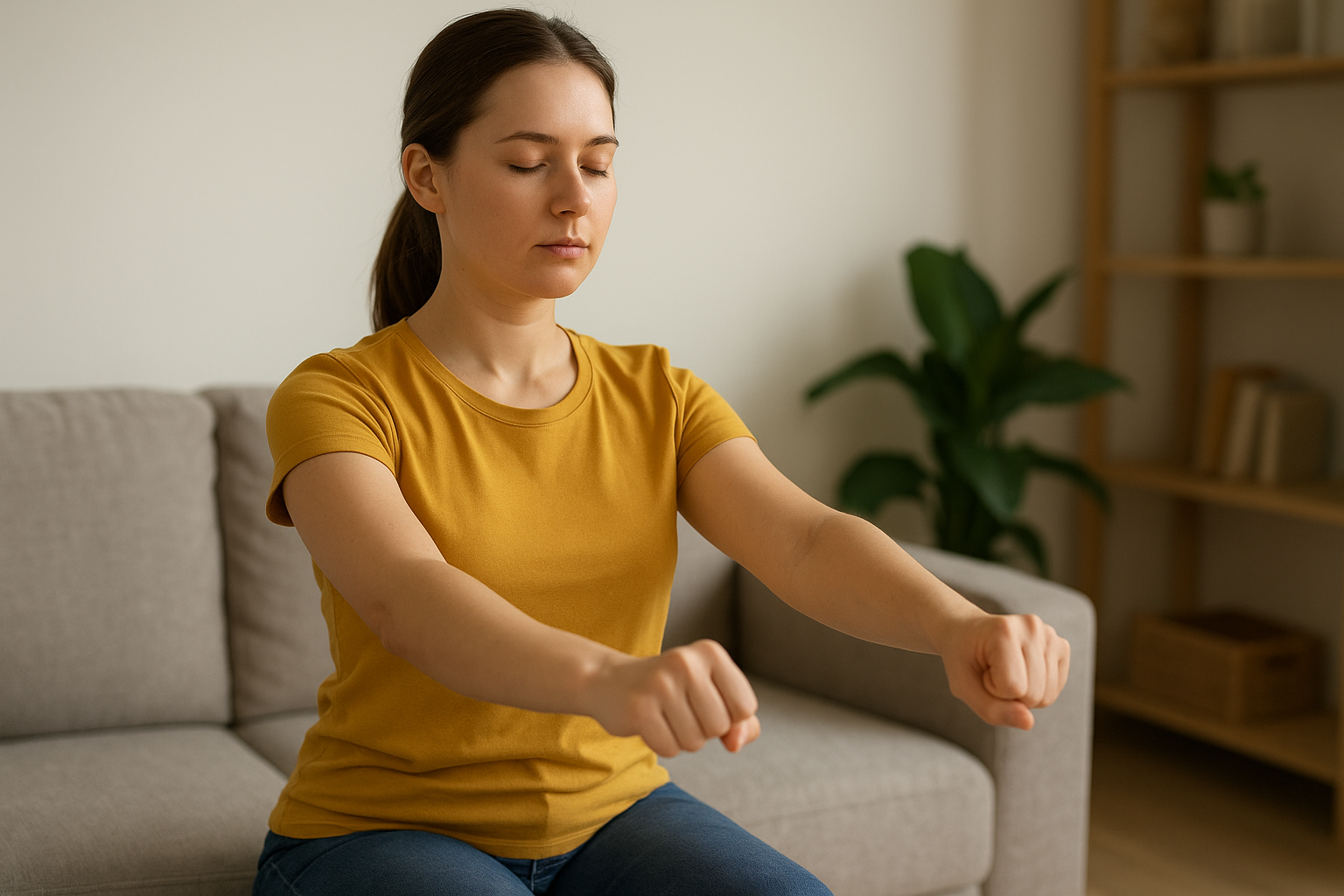
Start with your hands and forearms by making tight fists for five seconds, then release completely. Move to your shoulders and neck, pulling them up toward your ears before dropping them. Tense your face and jaw by squeezing everything toward your nose, then relax. Finish with your legs and feet, pressing them into the floor or extending them straight before releasing. Complete the entire sequence in under two minutes.
Short versions for meetings or school
Tense only your hands under a table or press your feet firmly into the floor for 10 seconds without anyone noticing. You can also squeeze your shoulder blades together while sitting upright in your chair. These subtle versions provide the same tension-release benefit without drawing attention.
Signs you are over-tensing
Stop if you feel sharp pain rather than just tight muscle sensation. Holding tension for longer than 10 seconds or gripping so hard you shake or strain defeats the purpose of the exercise by adding stress instead of releasing it.
8. Take a sensory walk
Walking engages your body and senses at the same time, making it one of the most accessible grounding techniques for stress that doesn't require you to stop what you're doing or find a private space. The combination of rhythmic movement and deliberate sensory observation shifts your focus from internal worry to external awareness. You can take a sensory walk around your block, through your office building, or even inside your home when leaving isn't an option.
-
Repetitive physical motion activates your vestibular system, which helps regulate your nervous system and creates a natural calming effect similar to rocking or swaying. Walking also increases blood flow and oxygen to your brain, which improves your ability to think clearly and make decisions under pressure. The predictable rhythm of your steps gives your mind something concrete to follow instead of bouncing between anxious thoughts.
Movement creates a physical outlet for the energy that builds up during stress.
-
Notice five things you can see as you walk, whether that's colors, shapes, or movement. Listen for four distinct sounds around you. Feel three textures under your feet or against your hands. Identify two scents in the air. Notice one taste in your mouth or recall a favorite flavor. Spend at least two minutes walking while cycling through these observations.
-
Walk through different rooms in your home or office building, paying attention to temperature changes and floor textures as you move. You can also walk in place near a window while observing what's happening outside. Hallways, stairwells, and even pacing in a private space provide enough movement to activate the grounding effect.
-
Schedule a five-minute sensory walk at consistent times during your day, such as after lunch or before bed, to reset your nervous system before stress accumulates. Regular walking helps your body recognize this activity as a reliable calming pattern, which makes the technique more effective when you need it during actual stress.
9. Name and categorize what you see
Naming and categorizing objects in your environment gives your mind a structured task that competes with anxious thoughts for mental bandwidth. This grounding technique for stress works by turning observation into an active sorting exercise that forces your brain to focus on external details rather than internal worry. You can do this silently at your desk, in a waiting room, or anywhere you feel overwhelmed and need to redirect your attention quickly.
-
When anxiety floods your thoughts, your brain struggles to distinguish between urgent threats and background noise. Sorting what you see into categories creates a clear framework that organizes sensory input and reduces mental chaos. This organizational process activates problem-solving areas of your brain that naturally compete with the regions responsible for generating anxious thoughts.
Categorization forces your mind to follow a logical pattern instead of jumping between fears.
-
Choose a category like colors, shapes, or materials. Scan your environment and mentally name every item that fits your chosen category. Count as you go to track your progress. Spend 60 to 90 seconds on one category before switching to another if needed.
-
Try sorting by texture (smooth, rough, soft), function (things that hold, things that open), or origin (natural, manufactured). You can also use letter categories by finding objects that start with specific letters of the alphabet.
-
Stick to observable facts about objects rather than stories or meanings attached to them. If you notice yourself analyzing why something is there or what it represents, return to simple naming without interpretation. Keep your observations concrete and visual.
10. Use an anchoring statement
An anchoring statement gives you verbal grounding that works alongside other grounding techniques for stress by creating a mental touchpoint you can return to when thoughts spiral. Unlike positive affirmations that might feel forced or unrealistic, anchoring statements focus on present reality and facts that your brain can accept even during high stress. You repeat a simple phrase that reminds you where you are, what's happening now, and that this moment will pass.
-
Anchoring statements interrupt the catastrophic thinking that pulls you into imagined future scenarios or past regrets. When you speak or think a grounding phrase, you give your mind clear information about the present moment that competes with anxious predictions. This verbal cue works similarly to naming objects around you but targets your internal experience instead of external surroundings.
A short factual statement interrupts the story your anxiety is telling.
-
Start with observable facts about your current situation rather than aspirational statements. Include your location, time, or immediate safety to anchor the phrase in reality. Keep it under ten words so you can remember and repeat it easily without thinking too hard.
-
For work stress, try "I am at my desk, and I am breathing." During parenting overwhelm, use "This feeling is temporary and my child is safe." In relationship conflict, anchor with "I am in my home, and I can respond calmly."
-
Combine your anchoring statement with box breathing or progressive muscle relaxation when verbal grounding alone doesn't shift your stress level. Saying your statement out loud while holding ice or during a sensory walk strengthens the grounding effect by engaging multiple systems at once.
11. Connect with nature using your senses
Nature exposure offers one of the most accessible grounding techniques for stress because it combines sensory variety with an environment your nervous system recognizes as safe. Spending time outdoors and deliberately engaging your senses creates a biological shift that reduces cortisol and activates your parasympathetic nervous system. You don't need wilderness or hiking trails to benefit from nature grounding; your backyard, a neighborhood street with trees, or even a small park provides enough natural elements to interrupt stress.
-
Natural settings trigger ancient survival patterns in your brain that associate green space, fresh air, and natural sounds with lower threat levels. Your nervous system evolved to process these environmental cues as signals that you're safe enough to rest rather than stay alert for danger. This biological response happens automatically when you engage with nature, making it effective even when you feel too overwhelmed to think your way out of stress.
Nature provides automatic sensory input that your nervous system interprets as safety.
-
Step outside and focus on five natural elements you can observe: the color of leaves, the texture of bark, the sound of wind or birds, the smell of grass or soil, and the feeling of air temperature on your skin. Spend 30 seconds noticing each element without analyzing or judging what you observe. Walk slowly if possible to extend the sensory experience.
-
Stand near a window with a view of trees, sky, or any green space and practice the same sensory observations. You can also bring nature indoors by touching houseplants, smelling herbs, or listening to recorded nature sounds while looking at images of outdoor scenes.
-
Schedule three 10-minute nature breaks each week at consistent times to build a predictable pattern your nervous system recognizes. Track which settings and times of day provide the strongest stress relief so you can prioritize those locations when anxiety builds.
Next steps
You now have 11 grounding techniques for stress that work in different situations and settings. The key to making these tools effective involves practicing them before you need them, not just reading about them and hoping you'll remember during a crisis. Start by testing two or three techniques this week to discover which ones feel most natural for your body and lifestyle.
Building these skills takes repetition, but you don't have to figure it out alone. If stress and anxiety regularly interfere with your daily life or relationships, working with a therapist helps you develop a personalized plan that addresses your specific triggers and nervous system patterns. At Breath of Hope Professional Counseling, our San Antonio team specializes in trauma-informed therapy and evidence-based approaches that give you lasting tools beyond quick fixes. Schedule a consultation to build the grounding practice that actually fits your life.