

Gottman Method Couples Therapy Near Me: Find The Right Fit
Searching for Gottman Method couples therapy near me usually means you've hit a point where something needs to change. Maybe conversations keep circling back to the same arguments, or emotional distance has crept in without a clear cause. Whatever brought you here, acknowledging you need support is the first real step toward repair.
Finding the right therapist matters as much as choosing the right method. The Gottman approach is research-backed and effective, but only when delivered by someone with proper certification and clinical experience. At Breath of Hope Professional Counseling in San Antonio, our clinicians specialize in Gottman Method therapy, helping couples move past painful patterns and rebuild lasting connection. This guide will show you exactly how to find a qualified therapist in your area and what to look for before booking that first session.
What Gottman Method couples therapy is and who it helps
The Gottman Method is a structured, research-based approach to couples therapy developed by Drs. John and Julie Gottman after studying thousands of couples over four decades. You'll work through specific assessment tools and exercises designed to identify the exact patterns keeping you stuck. Unlike open-ended talk therapy, this method gives you practical skills you can use immediately to handle conflict, rebuild trust, and strengthen emotional connection.
The research foundation and core principles
Drs. Gottman tracked couples in a lab setting called the "Love Lab," measuring everything from heart rates to facial expressions during conflict. Their research identified four communication patterns that predict divorce with over 90% accuracy, which they call the Four Horsemen: criticism, contempt, defensiveness, and stonewalling. When you search for Gottman method couples therapy near me, you're looking for therapists trained to spot these patterns in your relationship and teach you specific antidotes to each one.

The method builds on what the Gottmans call the Sound Relationship House, a framework with seven levels that represent different aspects of a healthy partnership. Your therapist will assess where you're strong and where you need support, from building love maps (detailed knowledge of your partner's inner world) to creating shared meaning. This isn't vague advice about "communicating better." You'll learn concrete techniques like softened startups for difficult conversations and repair attempts to de-escalate arguments before they spiral.
"The goal isn't to eliminate conflict. It's to handle it in a way that brings you closer instead of pushing you apart."
Who benefits most from this approach
You'll get the most from Gottman therapy if you're dealing with recurring arguments that follow the same script every time. Couples who find themselves having the same fight about money, parenting, or household responsibilities month after month often see rapid progress because the method targets those specific patterns directly. The structured format works well when both partners want change but don't know where to start.
This approach also helps when emotional distance has become the default. If you've stopped sharing daily details, lost physical intimacy, or feel more like roommates than partners, the Gottman exercises rebuild those connection points systematically. You'll practice turning toward each other's bids for attention instead of turning away, which research shows is critical for long-term satisfaction.
Couples facing trust issues after betrayal often choose Gottman-trained therapists because the method includes a specific protocol for affair recovery. Your clinician will guide you through processing the hurt, rebuilding safety, and creating a relationship that prevents future betrayals. The structured timeline and clear milestones make an overwhelming situation feel manageable.
The method is less effective if one partner refuses to participate or if abuse is present in the relationship. Gottman therapy assumes both people are willing to look at their own contribution to problems and try new behaviors. If that foundation isn't there, other interventions need to happen first. You also won't benefit if you're looking for someone to validate that your partner is entirely at fault. The approach asks both of you to take responsibility for changing your part of the dance.
Step 1. Build a short list of local options
You need a clear starting point when searching for Gottman method couples therapy near me, and that means casting a focused net across the right resources. Building your list strategically saves time and increases the odds you'll find someone with proper certification rather than therapists who simply mention Gottman on their website. Aim for five to eight qualified candidates before you start narrowing down based on other factors like insurance or availability.
Start with the Gottman Referral Network
The official Gottman Institute maintains a searchable directory of trained clinicians at gottman.com. Type your city or zip code into their referral tool to see therapists who've completed Gottman training levels. This database shows each provider's certification level, from basic training through full clinical certification. You want therapists listed as Gottman-Certified, which means they've completed Level 3 training and passed competency assessments.
Copy the names, contact information, and certification details for anyone within a reasonable driving distance. If you're open to virtual sessions, expand your radius to include therapists licensed in your state who offer telehealth. Some certified providers only see couples in person, so note their session formats as you go.
Expand your search with local directories
Psychology Today's therapist finder lets you filter by treatment approach and location. Check the box for "Gottman Method" under modalities and enter your zip code. This often surfaces therapists who completed Gottman training but aren't listed in the official directory yet. Verify their credentials during your interview later.
Your insurance provider's directory is your next stop if you plan to use benefits. Call the number on your card and ask specifically for couples therapists trained in Gottman Method. Representatives can filter by specialty faster than you can search the online portal. Write down the names they provide even if they're already on your list from other sources.
Document what you find
Create a simple tracking sheet to compare options as you research. Use this template to stay organized:
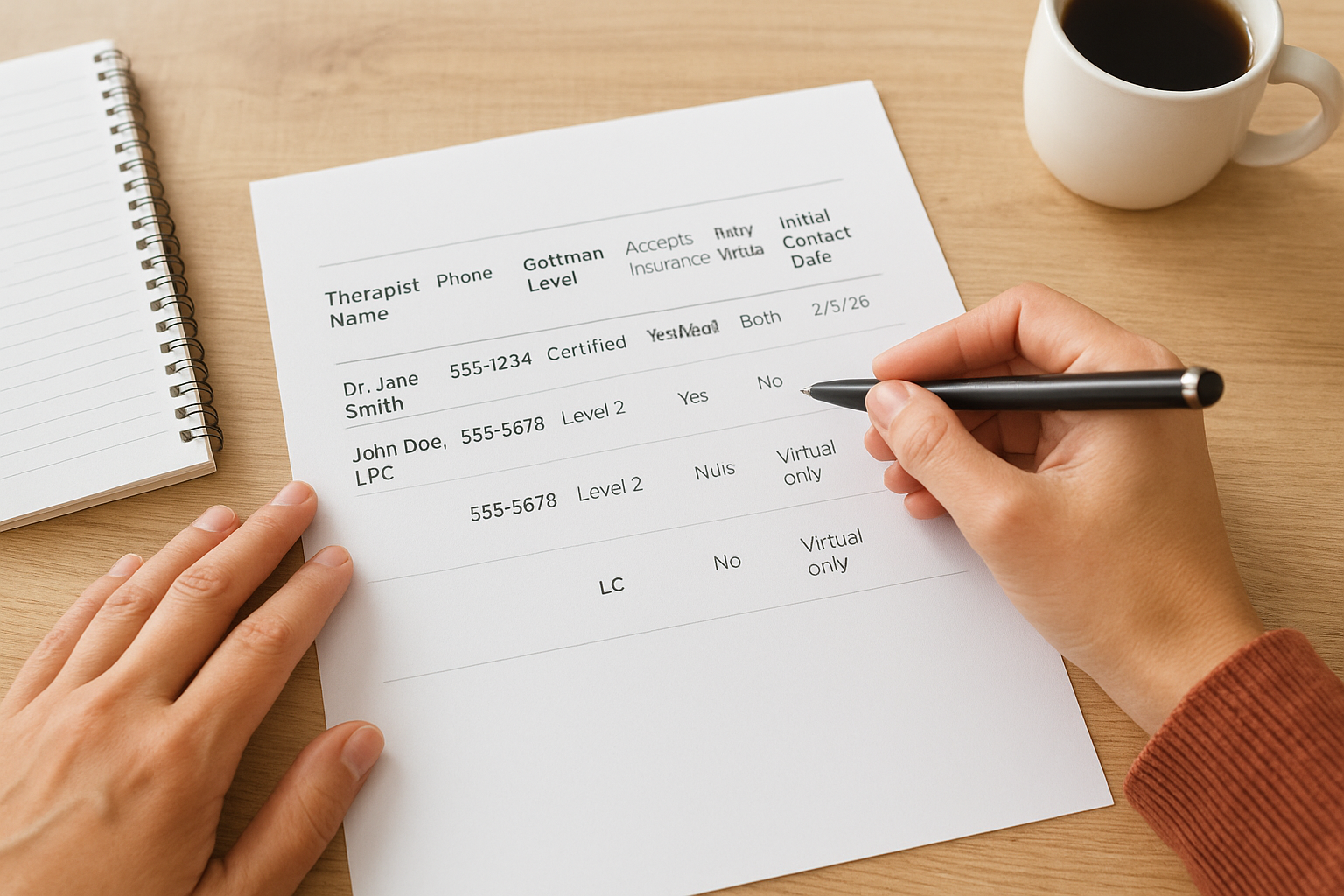
Therapist NamePhoneGottman LevelLicense TypeAccepts InsuranceIn-Person/VirtualInitial Contact DateDr. Jane Smith555-1234CertifiedLMFTYes (Aetna)Both2/5/26John Doe, LPC555-5678Level 2LPCNoVirtual only2/5/26
"A simple spreadsheet keeps you from forgetting details when you're juggling multiple consultations."
Include columns for response time after your initial inquiry and any red flags that come up. This becomes your master reference as you move through the vetting process.
Step 2. Verify training, license, and fit
You've built your list, but now you need to confirm each therapist's credentials before spending time on consultations. A therapist who claims Gottman expertise without formal training can waste months of your time and money on ineffective sessions. Verification takes fifteen minutes per candidate and protects you from practitioners who inflate their qualifications. Check licensing status, training documentation, and practical logistics in that order.
Check credentials against official databases
Your state's licensing board website is the first place to verify a therapist's legal standing. Search for your state board of professional counseling, marriage and family therapy, or psychology depending on the credential type listed (LPC, LMFT, or psychologist). Enter the therapist's name into the board's lookup tool to confirm their license is active and unrestricted. You'll see any disciplinary actions, expired licenses, or restrictions that disqualify them immediately.
Look for the license number, issue date, and expiration date on the search results. A license that expires in three months might indicate an administrative issue or someone preparing to retire. Cross-reference this information with what appears on their website or directory listing to catch discrepancies.
Confirm Gottman-specific training levels
Training levels matter more than casual mentions of the method. The Gottman Institute offers three progressive training levels, and only Level 3 graduates earn the "Gottman-Certified Therapist" designation. You want someone who completed at least Level 2, which covers the full assessment process and intervention tools. Level 1 training alone gives therapists basic concepts but not the competency to deliver the method effectively.
Call the Gottman Institute directly at their Seattle office if a therapist's certification level isn't clear from online sources. Their staff will confirm whether someone completed training and what certification tier they hold. Some therapists list "Gottman-trained" without specifying the level, which usually means Level 1 only.
"Certification level directly predicts how well a therapist can apply the method to your specific relationship dynamics."
Assess practical fit factors
Logistics can derail therapy before it starts, so map out the practical requirements upfront. Calculate driving time to their office during the day and time you'd actually attend sessions. A therapist forty minutes away might work for evening appointments but becomes impossible if you need lunch-hour sessions.
Check their fee structure and insurance policies by calling the office directly. Ask these specific questions:
What's your session rate for couples?
Do you file insurance claims directly or provide superbills for reimbursement?
What's your cancellation policy and fee?
Do you offer sliding scale rates if we pay out of pocket?
Confirm their availability matches your schedule needs. If you both work standard hours, weekend or evening appointment slots become essential. Some Gottman therapists book months ahead, so ask about their current wait time when searching for gottman method couples therapy near me.
Step 3. Interview therapists with the right questions
Most Gottman-trained therapists offer a free phone consultation lasting fifteen to thirty minutes, and this call determines whether you'll invest thousands of dollars wisely or waste months with the wrong fit. You're not just gathering information during this conversation. You're testing how the therapist responds under pressure, handles direct questions, and explains complex concepts in plain language. The way they answer tells you more about their clinical skill than any website biography ever could.
Prepare your consultation script
Write down your questions before the call so you don't forget critical topics when you're nervous. Keep your question list visible during the conversation and check off items as you go. Start with an opening statement that frames your situation in two sentences maximum, then move directly into your prepared questions.
Your opening might sound like: "We've been together eight years and keep having the same fight about household responsibilities. We're looking for a Gottman-certified therapist who can help us break this pattern." This sets context without telling your entire story during a screening call.
Questions that reveal clinical approach
Ask these specific questions to every therapist on your short list:
Training and experience:
What level of Gottman certification do you hold?
How many couples have you treated using this method in the past year?
Do you integrate other approaches with Gottman, or do you use it as your primary framework?
Treatment structure:
What happens in the first session versus ongoing sessions?
How do you assess our relationship dynamics?
What homework or between-session work do you assign?
Logistics and boundaries:
Do you see partners individually or only together?
What's your policy if one of us wants to quit therapy mid-treatment?
How do you handle crisis situations outside session times?
"The best therapists answer each question directly without deflecting to scheduling or fees."
Evaluate responses for alignment
Listen for concrete answers rather than vague therapeutic language. When you ask about assessment, a qualified Gottman therapist should mention the Relationship Checkup or similar intake tools by name. If they speak only in generalities about "getting to know you," they likely lack depth in the method.
Red flags include therapists who can't explain their certification level, refuse to discuss their clinical approach during consultation, or pressure you to book immediately without answering your questions. Trust your instinct if someone dismisses your concerns or makes you feel judged during this initial call. Your search for gottman method couples therapy near me should lead to someone who demonstrates respect and clarity from the first interaction.
Step 4. Choose a format and plan for cost
Your session format directly affects both the therapy experience and your budget, so decide this before you commit to a therapist. Some couples assume in-person sessions work better, but research shows virtual Gottman therapy produces equivalent outcomes when both partners have reliable internet and a private space. The format you choose needs to match your practical reality, not an idealized version of what therapy "should" look like.
Decide between in-person and virtual sessions
In-person sessions make sense when you live close to a qualified Gottman therapist and want the contained environment of a professional office. You'll drive to their location weekly, sit in their therapy room, and avoid the technical issues that sometimes interrupt video calls. Many couples find the physical separation from home helps them focus without distractions like pets, children, or household tasks pulling their attention.
Virtual sessions eliminate travel time and expand your options beyond local providers. You can work with a Gottman-certified therapist anywhere in your state, which matters if your search for gottman method couples therapy near me turns up limited local options. Schedule flexibility improves dramatically when you're not factoring in commute time, and you'll attend from your own home where you already feel comfortable discussing difficult topics.
Consider hybrid formats where you alternate between in-person and virtual sessions. Some therapists offer this arrangement, letting you handle routine check-ins virtually while reserving in-person appointments for intensive work or breakthrough sessions.
Calculate total cost and payment options
Gottman couples therapy costs between $150 and $300 per session in most markets, with sessions typically running 50 to 90 minutes. Plan for an initial assessment phase of two to three sessions before you move into active treatment. Most couples attend weekly for three to six months, which translates to this cost range:
DurationSessionsCost Range (at $200/session)3 months12 sessions$2,4006 months24 sessions$4,80012 months48 sessions$9,600
Ask your therapist about payment structures that reduce the sticker shock. Some offer package pricing where you pay for four to six sessions upfront at a reduced rate. Others provide sliding scale fees based on household income, though availability varies by practice.
"Planning the financial commitment upfront prevents money stress from sabotaging your progress halfway through treatment."
Check whether your insurance covers couples therapy by calling the member services number on your card. Many plans exclude relationship counseling but will reimburse if your therapist diagnoses an individual mental health condition like anxiety or depression. Request a superbill from your therapist to submit for out-of-network reimbursement if they don't accept insurance directly.
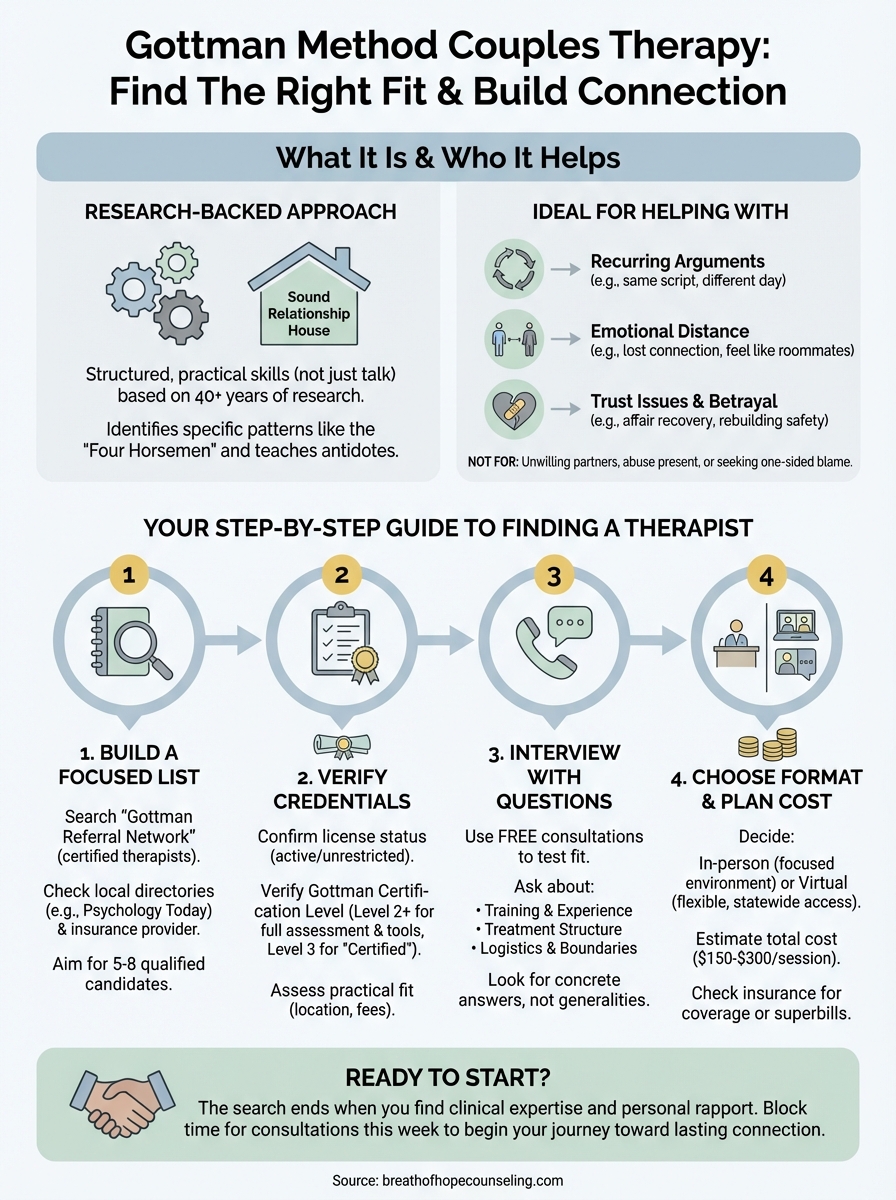
Next steps to get the help you need
You now have a complete process to find qualified Gottman therapists in your area, verify their credentials, and choose the right format for your budget. Your short list of candidates should include therapists with Level 2 or Level 3 Gottman certification, active state licenses, and availability that matches your schedule. Block time this week to complete your consultation calls with your top three choices before spots fill up.
The search for gottman method couples therapy near me ends when you book that first session with someone who demonstrates both clinical expertise and personal rapport. At Breath of Hope Professional Counseling, our Gottman-certified therapists in San Antonio help couples move past recurring conflicts and rebuild genuine connection through evidence-based interventions. Schedule a free 30-minute consultation to discuss your relationship goals and determine if our approach fits what you need right now.