

What Is Conflict Resolution? Steps, Skills, And Examples
Every relationship, whether romantic, professional, or familial, encounters disagreement. The difference between relationships that thrive and those that deteriorate often comes down to one critical skill: how people handle conflict. Understanding what is conflict resolution gives you a framework for transforming tense moments into opportunities for deeper connection.
Conflict itself isn't inherently destructive. Handled poorly, it erodes trust and creates emotional distance. Handled well, it builds intimacy and strengthens bonds. The challenge is that most people never learn effective conflict resolution strategies, they simply repeat patterns they observed growing up or react impulsively when emotions run high.
This article breaks down the essential steps, skills, and real-world examples you need to resolve disputes constructively. At Breath of Hope Professional Counseling, we work with couples and individuals in San Antonio using evidence-based approaches like the Gottman Method to help clients move through conflict toward genuine resolution and lasting change. Whether you're looking to improve communication with your partner or navigate difficult conversations more effectively, these principles will give you a solid foundation.
What conflict resolution is and is not
Before you can apply effective strategies, you need clarity on what conflict resolution actually involves. Many people carry misconceptions that prevent them from engaging productively when disagreements arise. Conflict resolution is a deliberate process, not a spontaneous reaction, and it requires intentional effort from everyone involved.
What conflict resolution actually is
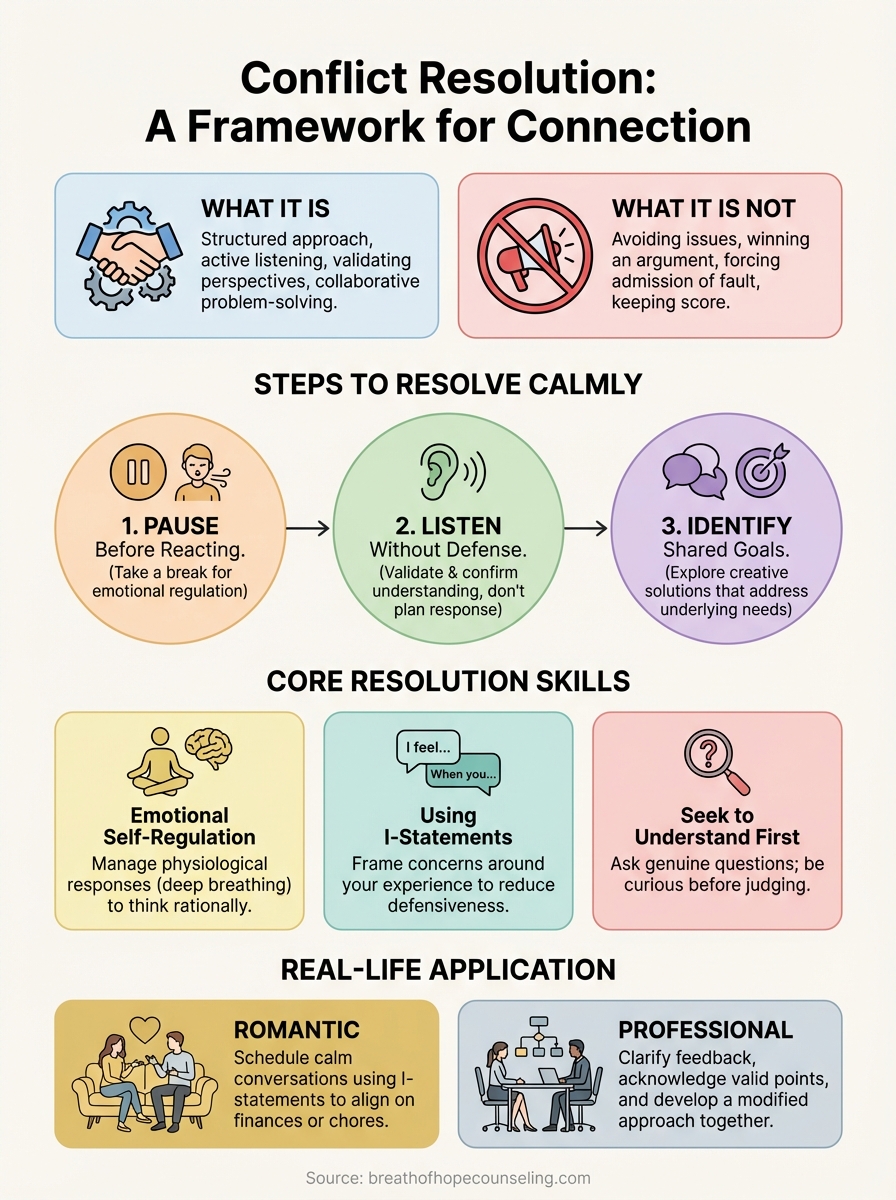
Conflict resolution is a structured approach to addressing disagreements by identifying underlying needs, managing emotions, and working toward mutually acceptable solutions. When you ask what is conflict resolution, you're really asking how two people can move from opposition to understanding without sacrificing their core needs or values.
The process involves active listening, validating each person's experience, and exploring creative solutions that honor both perspectives. Resolution doesn't mean one person wins and the other loses. It means you both feel heard and respected, even when you don't agree on every detail. This approach requires patience, curiosity, and a willingness to step outside your immediate emotional reaction.
Effective conflict resolution transforms disagreements from power struggles into collaborative problem-solving.
What conflict resolution is not
Conflict resolution is not conflict avoidance. Sweeping issues under the rug or pretending everything is fine when it isn't doesn't resolve anything. It simply postpones the inevitable and often makes problems worse. Avoidance breeds resentment and creates emotional distance over time.
It's also not about keeping score or proving who's right. Resolution focuses on moving forward together, not on winning an argument or forcing your partner to admit fault. You're not trying to change someone's personality or make them see things exactly as you do. The goal is understanding and compromise, not domination or manipulation.
Why conflict resolution matters
Understanding what is conflict resolution and applying it in your daily life directly impacts your emotional well-being and the quality of your relationships. Without these skills, small disagreements escalate into lasting wounds that erode connection and trust over time. You carry unresolved tension into every interaction, creating cycles of defensiveness and withdrawal that become harder to break.
The ability to resolve conflict constructively determines whether your relationships deepen or deteriorate.
In your closest relationships
Your romantic partnership benefits most from effective conflict resolution. Couples who learn to navigate disagreements without contempt or stonewalling report higher satisfaction and intimacy. You build trust each time you handle a difficult conversation with respect and curiosity rather than blame. This skill transforms conflict from something you dread into an opportunity for growth.
Beyond personal connections
Conflict resolution skills extend into every domain of your life. You encounter disagreements at work, within your family, and in community settings. People who can address tensions directly and respectfully advance in their careers and maintain healthier boundaries. These skills reduce stress and help you feel more capable when challenges arise.
Steps to resolve conflict calmly
When emotions escalate, you need a practical roadmap to navigate tension without making things worse. These steps provide a structured approach that prevents reactive communication and creates space for genuine resolution. Following this sequence helps you stay grounded even when your partner or the other person feels upset.
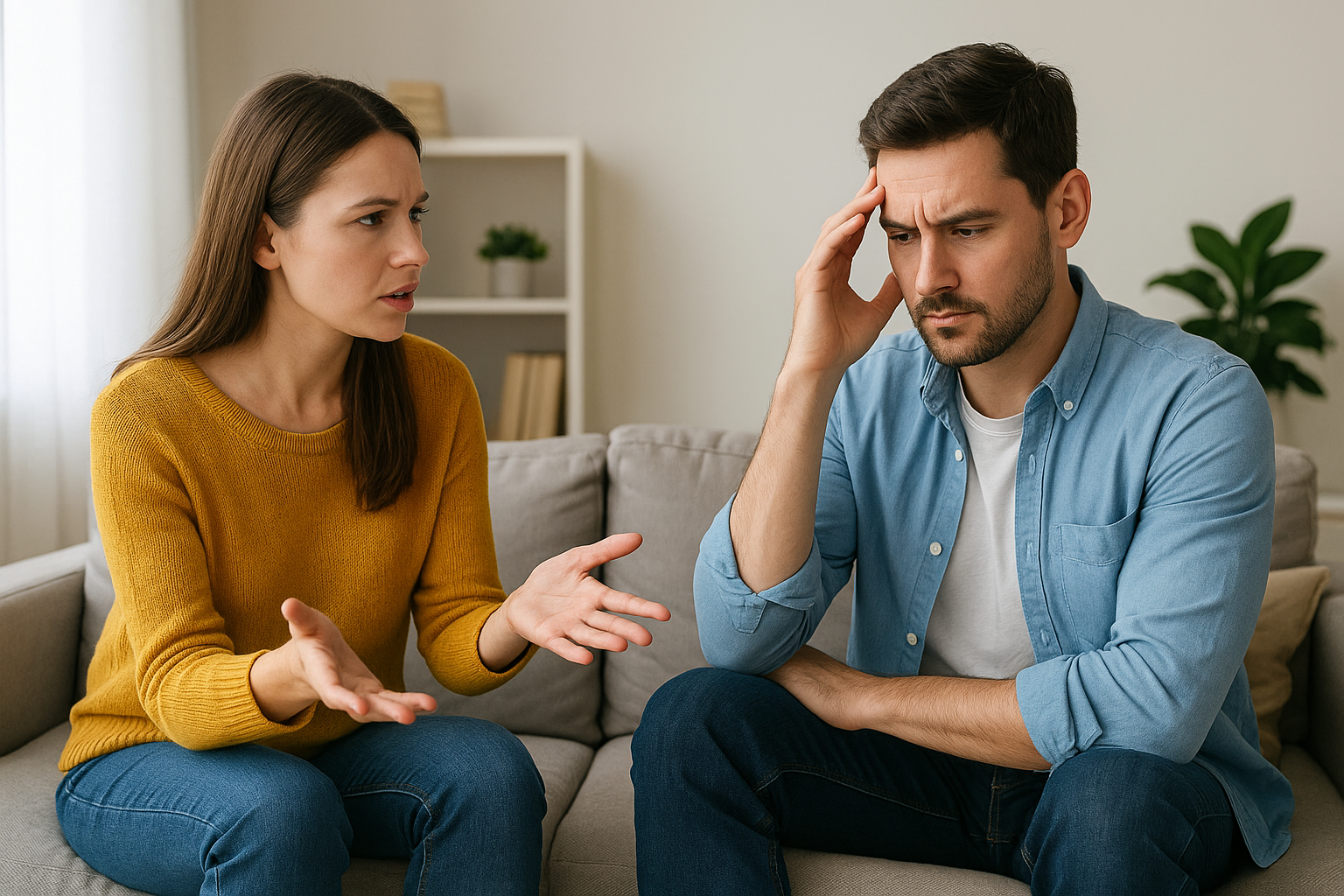
Pause before reacting
Take a deliberate break when you notice your heart racing or your thoughts spiraling into defensiveness. This isn't avoidance; it's emotional regulation. Tell the other person you need ten to twenty minutes to collect yourself before continuing the conversation. Calming your nervous system gives you access to the rational part of your brain that can problem-solve.
Physical distance creates emotional space for thoughtful responses instead of reactive attacks.
Listen without preparing your defense
Focus entirely on understanding their perspective before you formulate your response. Repeat back what you heard in your own words to confirm you understood correctly. This validation doesn't mean you agree, it means you recognize their experience as real and worth acknowledging. Active listening disarms defensiveness and opens the door to mutual understanding.
Identify shared goals
Ask what outcome would satisfy both of you, then explore creative solutions that address those underlying needs. When you shift from positions to interests, you discover unexpected paths forward that honor both perspectives.
Core conflict resolution skills to practice
Learning what is conflict resolution means developing specific competencies you can strengthen over time. These skills don't come naturally to most people, but with consistent practice, they become second nature. Each skill builds on the others to create a complete toolkit for handling disagreements constructively and maintaining emotional connection during tension.
Emotional self-regulation
You control your physiological responses before attempting to communicate productively. When your body enters fight-or-flight mode, you lose access to rational thinking and empathy. Practice noticing physical cues like shallow breathing, tightness in your chest, or racing thoughts. Deep breathing exercises and brief physical breaks help reset your nervous system so you can engage thoughtfully instead of reactively.
Self-awareness during emotional activation gives you choice over your responses.
Using I-statements
Frame your concerns around your experience rather than accusations about the other person's behavior. Instead of saying "You always ignore me," try "I feel hurt when I don't hear back from you for hours." This language pattern reduces defensiveness and opens dialogue. You take ownership of your feelings while clearly expressing what matters to you without blame or criticism.

Seeking to understand before being understood
Ask genuine questions about their perspective rather than waiting for your turn to speak. Curiosity replaces judgment when you approach conflict as a learning opportunity. This doesn't mean abandoning your position, it means valuing connection alongside being right.
Examples and methods in real life
Seeing what is conflict resolution looks like in practice helps you apply these principles to your own situations. Real examples demonstrate how theoretical concepts translate into actual conversations and outcomes. These scenarios show you different methods and approaches you can adapt to fit your specific circumstances and relationship dynamics.
In romantic partnerships
You and your partner disagree about how to spend money or divide household responsibilities. Instead of arguing about who's right, you schedule a calm conversation when neither of you feels defensive. You each share what matters most about the issue and why it feels important. Using I-statements and active listening, you explore solutions that address both perspectives, like creating a shared budget or rotating tasks based on preference rather than obligation.
Couples who practice structured conversations resolve disagreements faster and preserve intimacy.
In professional settings
A colleague criticizes your project approach during a team meeting. Rather than defending yourself immediately, you ask clarifying questions to understand their concerns fully. You acknowledge valid points while explaining your reasoning without dismissing their perspective. Together, you identify areas of agreement and develop a modified approach that incorporates both viewpoints and strengthens the final outcome.
Where to go from here
Understanding what is conflict resolution gives you the foundation, but applying these skills consistently requires practice and often guidance. You can start today by choosing one technique from this article and implementing it during your next disagreement. Notice what shifts when you pause before reacting or when you use I-statements instead of accusatory language. Small changes compound into significant improvements in how you connect with others and navigate tension.
Professional support accelerates your progress when conflict patterns feel entrenched or when you need help breaking destructive cycles. At Breath of Hope Professional Counseling, we specialize in evidence-based approaches like the Gottman Method to help individuals and couples in San Antonio develop lasting conflict resolution skills. If you're ready to transform how you handle disagreements and build stronger relationships, schedule a consultation with our team to discuss how therapy intensives or ongoing counseling can support your growth.