

How Does Marriage Counseling Work? Sessions, Goals, Results
You've probably heard that marriage counseling can help struggling couples, but how does marriage counseling work in practice? What actually happens behind closed doors, and how do conversations with a therapist translate into real change at home? These are fair questions, especially when you're considering investing time, money, and emotional energy into something unfamiliar.
The truth is, effective couples therapy follows a structured process designed to help partners understand each other better, break destructive patterns, and rebuild connection. It's not about a therapist telling you who's right or wrong. It's about learning new skills, gaining insight into your relationship dynamics, and creating lasting shifts in how you communicate and relate.
At Breath of Hope Professional Counseling, we specialize in couples and marriage therapy using the Gottman Method, a research-backed approach that gives partners practical tools to strengthen their bond. Whether you're dealing with constant conflict, emotional distance, or a specific crisis, understanding what to expect from the process can help you walk into your first session with clarity and confidence.
This guide breaks down how marriage counseling works from start to finish: the goals therapists focus on, what typical sessions look like, and how to measure whether it's actually working for your relationship.
Why couples choose marriage counseling
Couples don't wake up one day and decide to seek therapy on a whim. Most wait an average of six years after problems surface before reaching out for professional help. By the time partners walk through the door, they've often exhausted their own attempts to fix things, and patterns have become deeply entrenched. The decision to pursue counseling usually comes from a combination of pain, hope, and a willingness to try something different before giving up entirely.
"The healthiest couples aren't the ones without problems. They're the ones who know when to ask for help."
When communication has broken down
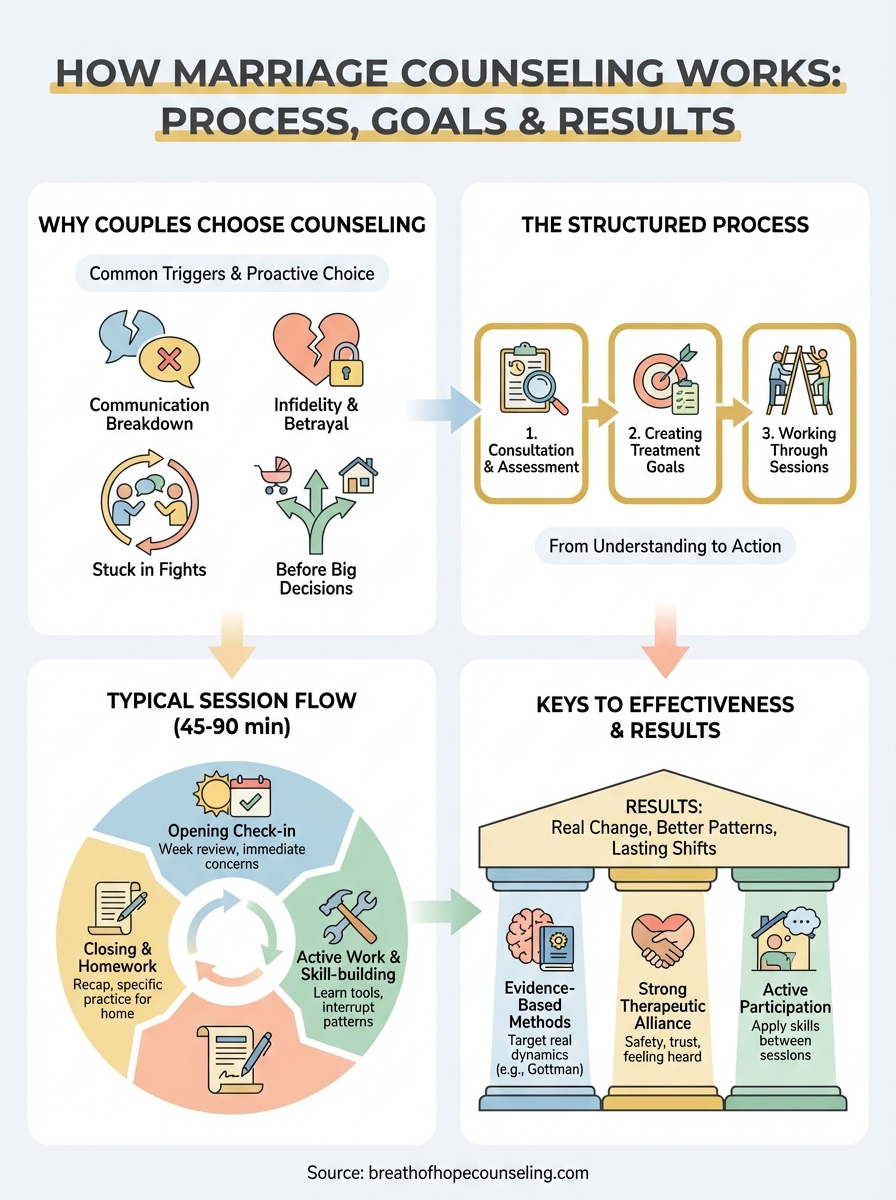
You might find yourselves talking past each other, having the same argument repeatedly without resolution, or avoiding difficult conversations altogether. Communication breakdowns are one of the most common reasons couples seek help. You notice that every discussion about money, parenting, or intimacy turns into a fight or shuts down before anything gets resolved. Simple conversations escalate quickly, or you've stopped talking about important topics because it feels pointless. Therapists help you identify the specific patterns keeping you stuck and teach you how to listen and speak in ways that actually create understanding instead of defensiveness.
After infidelity or major betrayal
Affairs, emotional betrayal, hidden finances, or broken promises can shatter trust in ways that feel impossible to repair alone. Recovering from infidelity requires more than just apologies and promises to do better. You need a structured process to rebuild safety, understand what happened, and decide whether the relationship can move forward. Marriage counseling provides a neutral space to process intense emotions, ask difficult questions, and work through the stages of healing with professional guidance. Without this support, couples often get stuck in cycles of blame, defensiveness, and resentment that prevent genuine repair.
When you feel stuck in the same fights
Perhaps you argue about the same issues over and over without progress, or you've noticed that conflicts follow predictable patterns regardless of the topic. One partner withdraws while the other pursues. Someone brings up past hurts every time a new problem arises. You recognize the cycle but can't seem to break it on your own. Understanding how does marriage counseling work starts with identifying these repetitive dynamics. Therapists help you see the underlying issues beneath surface arguments and teach you how to interrupt destructive patterns before they spiral. You learn that fighting isn't the problem; it's how you fight that determines whether conflicts bring you closer or push you apart.
Before making big decisions
Some couples seek counseling proactively when facing major transitions like having children, relocating for work, or caring for aging parents. Others come in when considering separation or divorce and want to make sure they've explored every option before ending the relationship. Preventive counseling helps you navigate challenging periods with better tools and awareness. Discernment counseling specifically helps couples decide whether to commit to working on the relationship or move toward separation with clarity and respect. These situations require a different approach than crisis intervention, but the support can be equally valuable.
How marriage counseling works step by step
Marriage counseling follows a structured progression that moves from assessment to active skill-building to long-term change. Understanding how does marriage counseling work means recognizing that each phase serves a specific purpose. Your therapist guides you through this process at a pace that matches your unique situation, but the general framework remains consistent across most evidence-based approaches.
Initial consultation and assessment
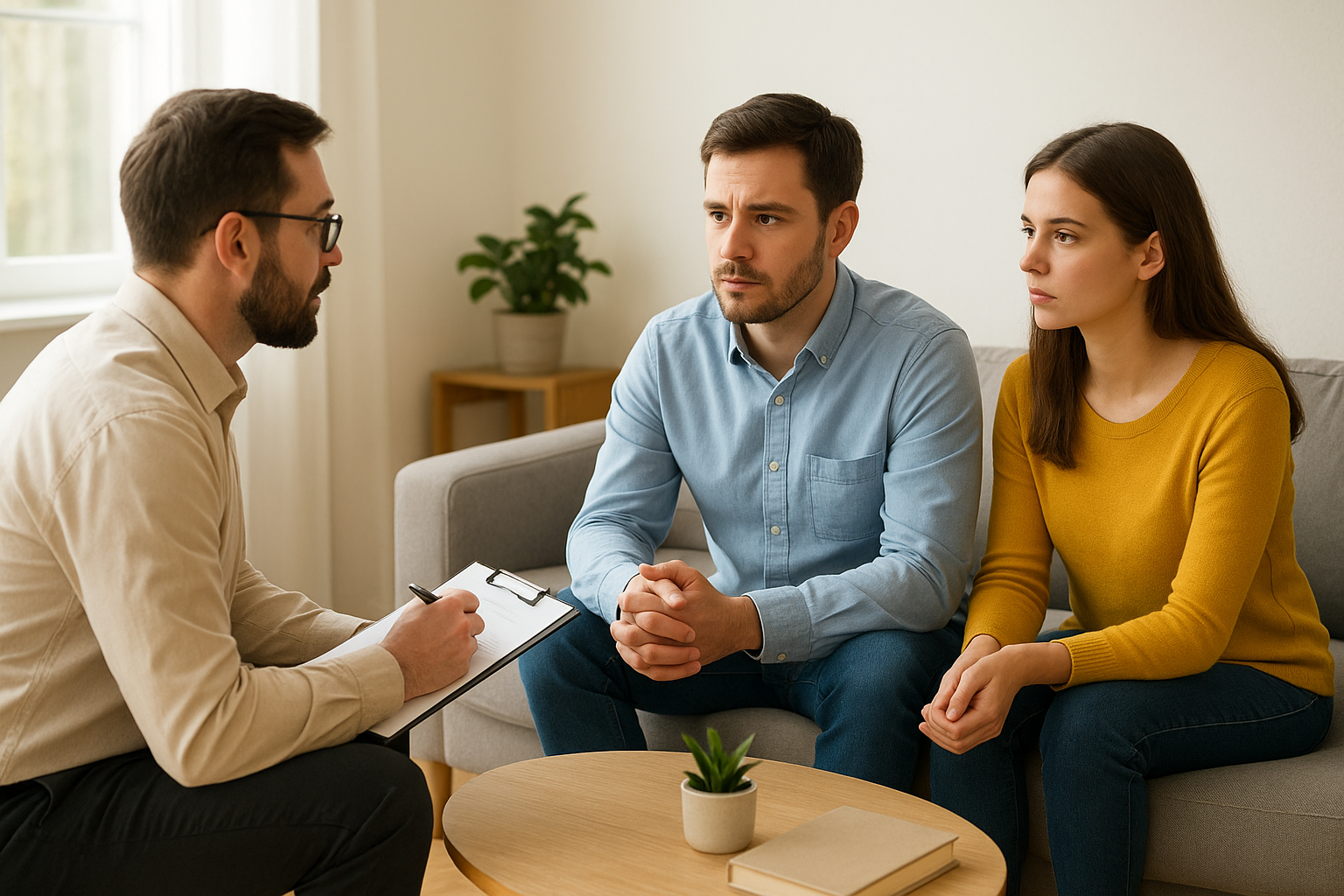
Your first session focuses on gathering information rather than solving problems immediately. The therapist asks about your relationship history, current concerns, and what you hope to achieve through counseling. You'll discuss how you met, what initially drew you together, and when things started feeling difficult. This assessment helps your counselor understand your specific dynamics and patterns before recommending an approach. Many practices, including Breath of Hope Professional Counseling, offer a preliminary phone consultation to ensure you're matched with the right therapist for your needs.
"Assessment isn't about finding fault. It's about understanding what's really happening beneath the surface."
Creating treatment goals together
After the initial assessment, you and your therapist establish clear, measurable goals for your work together. These might include improving communication during conflicts, rebuilding trust after betrayal, or increasing emotional intimacy. Effective goals are specific rather than vague. Instead of "get along better," you might aim to "have productive conversations about finances without shutting down." Your therapist helps you identify concrete markers of progress so you know whether the work is actually helping. This collaborative goal-setting ensures everyone stays focused on what matters most to your relationship.
Working through sessions systematically
The active phase of counseling involves learning and practicing new skills both in sessions and at home. Your therapist introduces concepts, helps you recognize unhelpful patterns in real time, and guides you through exercises designed to create different outcomes. You might practice active listening techniques, work through a conflict using specific tools, or explore underlying emotions that fuel surface arguments. Between-session work reinforces what you learn and helps you apply new approaches to everyday situations. Progress isn't always linear, but each session builds on the previous one toward sustainable change.
What happens in a typical session
Most marriage counseling sessions last 45 to 90 minutes and follow a consistent structure that helps you make steady progress. While specific approaches vary depending on your therapist's training and your relationship's needs, understanding how does marriage counseling work means recognizing the predictable rhythm that makes each session productive. You're not just venting about problems or rehashing old arguments. Your therapist guides the conversation toward specific outcomes while teaching you skills you can use outside the therapy room.

The opening check-in
Your therapist begins each session by asking about your week since the last meeting. This isn't small talk. You share what went well, what felt difficult, and whether you tried any homework or techniques from previous sessions. Your counselor listens for patterns and identifies immediate concerns that need attention. Sometimes this check-in becomes the entire session's focus if something significant happened that requires immediate processing. Other times, you briefly touch on the week and move into planned work. This opening helps your therapist gauge where you are emotionally and adjust the session accordingly.
"The check-in tells your therapist what you actually need today, not just what was planned."
Active work and skill-building
The middle portion involves direct learning and practice. Your therapist might teach you a specific communication technique and have you try it right there in the session. You could work through a recent conflict using new tools while your counselor coaches you in real time. Some sessions involve exploring underlying emotions or beliefs that drive surface behaviors. Your therapist interrupts unhelpful patterns as they happen, helping you see your dynamic from outside your usual perspective. This active engagement creates changes you can feel and apply immediately at home.
Closing and homework
Sessions end with a brief recap of what you covered and clear next steps. Your therapist assigns specific practices or exercises to try before your next meeting. These might include conversation formats, reflection questions, or connection activities. You leave knowing exactly what to focus on rather than feeling overwhelmed or unclear about progress. This structured closing ensures the work continues beyond the therapy room.
What makes marriage counseling effective
Not all therapy approaches deliver the same results. The effectiveness of marriage counseling depends on specific factors that either accelerate progress or keep couples spinning their wheels. Research shows that certain elements consistently predict positive outcomes, while others have little impact on whether relationships improve. Understanding what makes counseling work helps you recognize whether your current approach gives you the best chance of success.
Evidence-based methods that target real problems
Therapists trained in research-backed approaches like the Gottman Method, Emotionally Focused Therapy (EFT), or Imago Relationship Therapy follow structured frameworks proven to create change. These methods don't rely on generic advice or intuition. They target specific relationship dynamics identified through decades of clinical research. The Gottman Method, for example, teaches couples to recognize the Four Horsemen (criticism, contempt, defensiveness, stonewalling) and replace these patterns with productive alternatives. When you ask how does marriage counseling work, the answer starts with whether your therapist uses approaches backed by actual evidence rather than personal opinion or outdated techniques.
"Evidence-based methods give you tools that have already worked for thousands of couples facing similar challenges."
Strong therapeutic alliance and trust
You need to feel safe and respected by your therapist for the work to succeed. Research consistently shows that the quality of your relationship with your counselor predicts outcomes as much as the specific techniques used. When you trust your therapist's judgment, feel understood rather than judged, and believe they genuinely care about your relationship, you're more likely to stay engaged and vulnerable during difficult conversations. This alliance takes time to build but remains essential for lasting change.
Active participation between sessions
Real progress happens in your daily interactions, not just during weekly appointments. Couples who complete homework assignments, practice new skills at home, and actively apply what they learn see faster and more sustainable results than those who only engage during sessions. Your willingness to try different approaches, reflect on your own contributions to problems, and step outside your comfort zone determines whether counseling transforms your relationship or becomes another failed attempt.
Common questions and concerns
People considering marriage counseling often hesitate because they're unsure what to expect or worry about potential downsides. These concerns are completely normal, especially when you're vulnerable and uncertain about whether therapy can actually help. Addressing these questions directly helps you walk into your first session with realistic expectations rather than unnecessary anxiety.
Will the therapist take sides?
Professional marriage counselors don't play favorites or determine who's right in your conflicts. Your therapist remains neutral and focused on patterns rather than individual blame. They help both partners see their contributions to problems and identify opportunities for growth. You might occasionally feel challenged when your therapist points out an unhelpful behavior, but this feedback aims to create awareness rather than judgment. A skilled counselor balances the conversation so both people feel heard and respected throughout the process.
"The therapist's job is to support the relationship, not to pick a winner in your arguments."
What if only one partner wants to go?
Many couples start therapy with one motivated partner dragging the other along reluctantly. This dynamic doesn't doom your chances of success. Therapists trained in approaches like the Gottman Method work with whatever willingness exists and often help the hesitant partner become more engaged over time. You'll see better results when both people commit fully, but starting with one person invested beats avoiding help entirely. Your therapist can address resistance directly and help you understand whether continuing makes sense for your specific situation.
How long does it take to see results?
Understanding how does marriage counseling work includes realistic timelines for change. Most couples notice small shifts within the first few sessions, such as having one productive conversation about a difficult topic. Significant, lasting change typically takes three to six months of consistent work, though some see progress faster with intensive formats. The timeline depends on your specific issues, how long problems have existed, and your willingness to practice between sessions. You'll know therapy is working when patterns start breaking and new approaches feel more natural than old habits.
What to do next
You now understand how does marriage counseling work from the first consultation through measurable results. The next step involves deciding whether you're ready to invest in your relationship with professional support.
Start by reflecting on your specific concerns and what you hope will be different after therapy. Write down the patterns you want to change and the goals that matter most to both of you. This clarity helps you communicate your needs effectively during your first session.
If you're in the San Antonio area or anywhere in Texas, Breath of Hope Professional Counseling offers both in-person and virtual marriage therapy using the Gottman Method. We begin with a 30-minute phone consultation to match you with the right therapist for your unique situation. Schedule your consultation today to start building the partnership you want. Your relationship can improve with the right guidance and commitment.